
भारत के लिए practical guide जब Google review staff को target करे, threats, doxxing, intimidation या repeated abusive pressure शामिल करे और matter साधारण criticism से आगे बढ़ जाए.
क्यों Threatening Review को अलग तरह से पढ़ना चाहिए
कुछ Google review disputes का मुख्य सवाल unfair criticism नहीं होता. असली मुद्दा यह होता है कि review का इस्तेमाल staff को डराने, private details फैलाने, pile-on शुरू कराने या mental और physical safety पर दबाव बनाने के लिए हो रहा है. भारत में ऐसे file को ordinary one-star complaint की तरह नहीं संभालना चाहिए. यहां evidence discipline के साथ harassment, doxxing, privacy और platform-abuse angle को शुरुआत से अलग देखना जरूरी है.
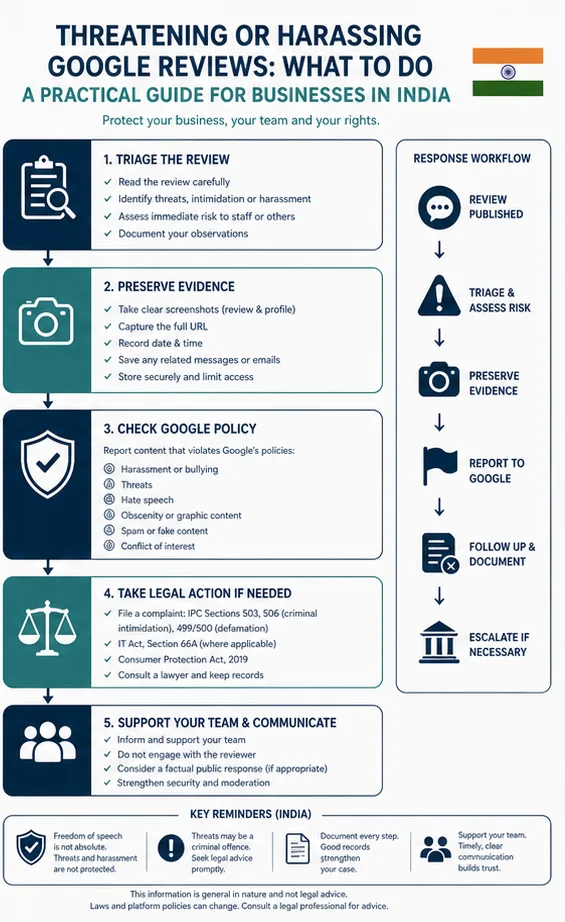
Practical discipline यह है कि तीन सवाल तुरंत अलग किए जाएँ. पहला, exact wording, threat, identifying detail और surrounding messages क्या हैं. दूसरा, facts पर कौन-सी Google category सबसे strong है: harassment, specific threat of harm, doxxing, personal information, fake engagement या दूसरी prohibited-content route. तीसरा, local privacy, defamation, staff-safety या broader legal risk कौन-से हैं जिनके कारण counsel review जल्दी करनी चाहिए. जब teams इन्हें मिला देती हैं, तो गलत public reply, lost evidence और weaker report जैसी समस्याएँ पैदा होती हैं.
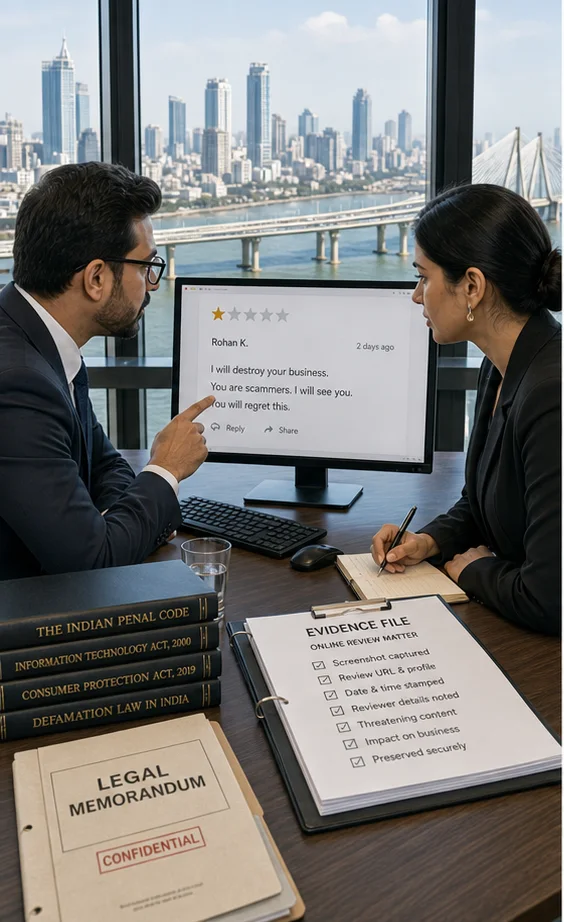
किसी भी Reply से पहले Evidence Checklist
पहला काम review को उसी रूप में preserve करना है. Full URL, reviewer profile, star rating, exact text, images, visible edits, owner replies, timestamps और profile पर review की position सब save करें. अगर author ने email, chat, refund demand, booking messages या off-platform threats भेजी हैं, तो उन्हें भी date और context के साथ preserve करें. Lawyer-grade file public review और off-platform conduct को connect करती है, लेकिन confused नहीं करती.
दूसरा काम classification है. उन passages को mark करें जो staff का नाम लेते हैं, private details खोलते हैं, future harm threaten करते हैं, दूसरों को attack करने के लिए encourage करते हैं, या ऐसी information दिखाते हैं जो public नहीं रहनी चाहिए. यह भी note करें कि reviewer को real customer relationship से match किया जा सकता है या नहीं, pressure money या leverage से जुड़ा है या नहीं, और wording बाद में बदली गई या नहीं. अगर staff safety concern raise करे, तो internal note में कौन, क्या, कब report किया यह लिखें. Goal drama नहीं, clean record है.
Google Policy, Reporting और Local Privacy Angle
Google policy यहाँ central है क्योंकि current Maps policy harassment, specific threats of harm, doxxing और consent के बिना personal information पोस्ट करने को expressly prohibit करती है. इसलिए strong report को Google की अपनी categories का इस्तेमाल करना चाहिए, generic defamation complaint का नहीं. अगर case में payment, review change या benefit pressure भी है, तो उस angle को अलग preserve करें क्योंकि platform-abuse और extortion overlap कर सकते हैं लेकिन identical नहीं होते.
साथ ही business को file को Digital Personal Data Protection Act, 2023 की रोशनी में भी review करना चाहिए. Review main problem हो, तब भी screenshots, internal circulation, redaction और Google submission के लिए privacy controls ज़रूरी रहते हैं. Safest workflow यही है कि केवल आवश्यक wording quote हो, owner reply में sensitive details repeat न हों, और Google-facing report internal legal file से aligned रहे. Local law named staff या public-facing professionals के खिलाफ threats की urgency को भी प्रभावित कर सकता है.

Public Response बिना Damage बढ़ाए
Public response आम तौर पर short, calm और safety-aware रहनी चाहिए. कई files में safest wording यह है कि business post को appropriate channel से review कर रही है और official private contact invite करती है. Reply को threatening language repeat नहीं करनी चाहिए, unnecessary personal details confirm नहीं करनी चाहिए, और evidence review से पहले reviewer को criminal, extortionist या stalker नहीं कहना चाहिए. Public anger अक्सर abusive reviewer को और attention देती है.
Internal teams को false reassurance भी avoid करनी चाहिए. यदि staff named या threatened है, तो matter को ordinary reputation housekeeping की तरह treat नहीं करना चाहिए. साथ ही reply यह promise भी न करे कि Google, police, regulator या court निश्चित रूप से act करेंगे. सही posture measured है: preserve, classify, report, review locally, और outward communication को internal file से narrower रखें.
कब Faster Counsel Review ज़रूरी हो सकती है
Faster review तब अधिक appropriate है जब review specific threat of harm, doxxing, repeated intimidation, named employee पर आरोप, multi-platform campaign, या ऐसा pattern दिखाए जो ordinary unhappy customer जैसा नहीं लगता. ऐसे files combined strategy justify कर सकती हैं: Google reporting, stronger evidence preservation, internal staff-safety measures, privacy-aware correspondence और next proportionate step पर local advice.
मुख्य सावधानी accuracy है. हर harsh या offensive review legal threat नहीं होती, और हर alarming post जल्दी remove नहीं होगी. फिर भी business की position अक्सर बेहतर होती है जब exact words जल्दी preserve किए जाते हैं, public review को surrounding messages से जोड़ा जाता है, counter-publication avoid की जाती है, और आरोप लगाने या अतिरिक्त material disclose करने से पहले local advice ली जाती है.
संबंधित PimLegal reading
अधिक संदर्भ के लिए Google review में personal data exposure पर हमारी local guide और भारत Google review removal page देखें. ये दो internal links personal-data issue को भारत की wider removal, response और escalation strategy से जोड़ते हैं.
चयनित आधिकारिक संदर्भ
- Digital Personal Data Protection Act, 2023
- Google prohibited and restricted content policy
- Google Business Profile review reporting guidance
व्यावहारिक निष्कर्ष
जब Google review criticism से निकलकर threat, harassment या targeted staff attack बन जाए, तब भारत में safest strategy disciplined preservation, restrained public wording, precise Google reporting और proportionate local review है.
यह लेख केवल सामान्य जानकारी है, भारत के किसी specific dispute के लिए legal advice नहीं. Formal notice या record disclosure से पहले local advice आवश्यक हो सकता है.