
A practical Switzerland guide for businesses facing Google reviews that attach doctored screenshots, fabricated invoices, edited chats, or misleading documents.
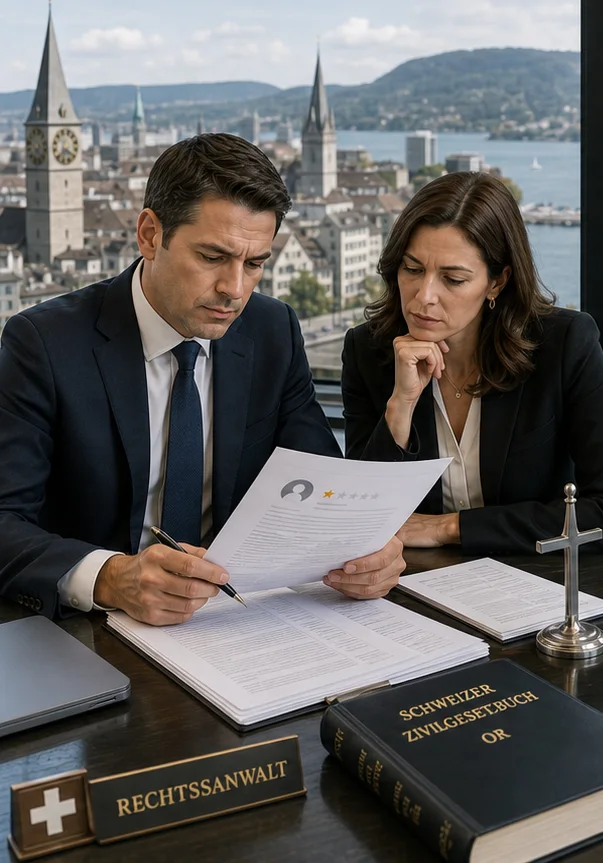
A harmful Google review becomes more serious when it tries to look proven by attaching cropped chats, altered invoices, edited receipts, or partial message threads. In Switzerland, the first mistake is often a public answer with the full customer file before anyone has checked what the posted image really shows, what was cut out, and whether the media is genuine at all.
The legal issue is not only falsity of words. A fabricated exhibit can create a false evidentiary impression, republish private data, and pressure the business into over-disclosure. The safer route is to separate three questions from the start: is the image authentic, what do the original records show, and does the posted media create a privacy problem under Federal Act on Data Protection alongside any defamation or unlawful-publication issue under Swiss Civil Code, article 28.
Why Fake-Screenshot Reviews Need A Separate File
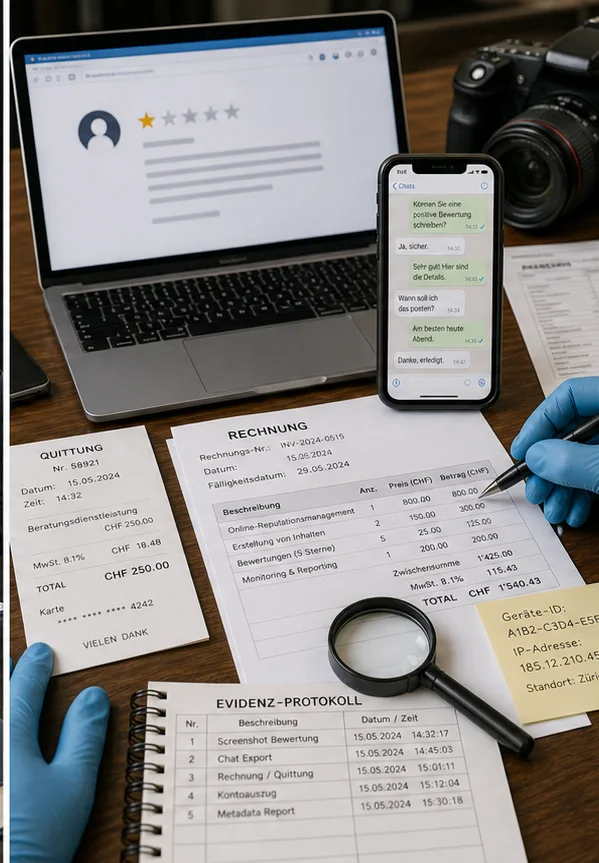
Preserve the full review URL, reviewer profile, star rating, exact review text, every attached image, visible edits, owner replies, report status, and the surrounding Google Business Profile context. Then preserve the original business-side records that correspond to the screenshot claim: full invoice, uncropped chat export, booking file, payment log, refund history, delivery or service note, and any metadata or timestamps still available.
A lawyer-grade comparison file should place the posted screenshot and the original record side by side, identify what was cropped, altered, mistranslated, or taken out of sequence, and keep untouched originals separate from annotated working copies. Google usually needs the narrow, non-confidential explanation; the full record should stay in the internal file unless a more formal route becomes proportionate.
Google Policy, Media Reporting, And Local Law
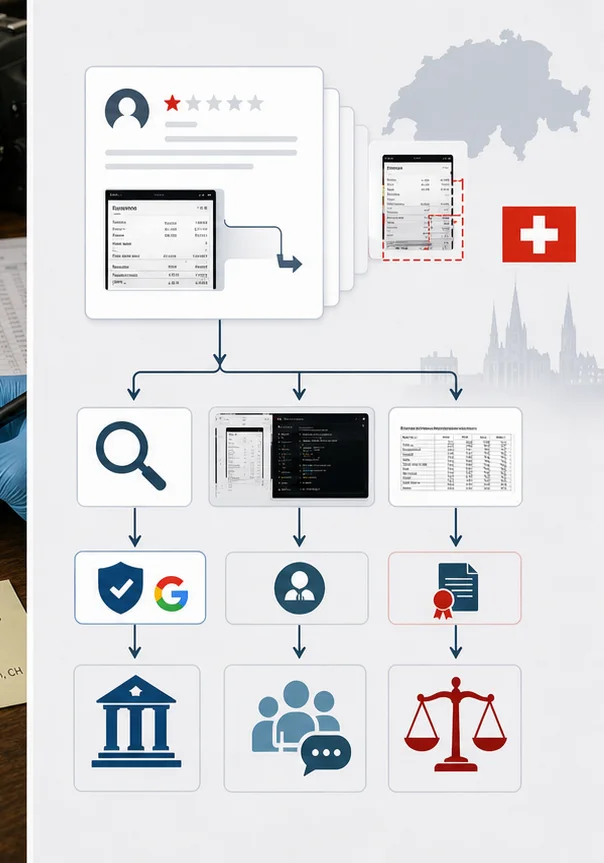
The Google route should stay narrow. Depending on the facts, the report may need to describe misrepresentation, fake engagement, misleading media, personal information, harassment, or a legal-removal angle if the image itself violates a defined right. A useful submission explains why the screenshot or document is incomplete or fabricated without turning the owner reply into a second publication of private material.
The internal legal review should still test the record against Swiss Civil Code, article 28 and Federal Act on Data Protection. Those sources help classify whether the problem is a false factual allegation, a misleading exhibit, a privacy-sensitive disclosure, or several of those at once. The public posture should stay narrower than the evidence file while the chronology is being built.
What A Measured Public Reply Usually Says
In many files, a defensible response does four things: it stays brief, avoids insults, avoids confirming confidential facts, and offers a private contact route. It can be enough to say that the business takes feedback seriously, cannot verify the described events from available records, and invites the reviewer to contact an official channel so the matter can be examined carefully.
What the reply should usually avoid is calling the reviewer a liar, scammer, extortionist, criminal, or competitor before the file supports that allegation clearly enough. It should also avoid publishing names, order numbers, screenshots, or internal explanations simply to prove the reviewer wrong. The public response is a risk-control step, not a courtroom submission.
When Escalation Deserves Closer Review
Closer escalation review may be justified when the review accuses the business of fraud or criminal conduct, names staff, exposes private data, threatens safety, appears coordinated, or affects lenders, regulators, licensing, or major contracts. In those files, the public reply should normally become even narrower while the evidence file becomes more detailed.
No result should be promised. A careful reply does not guarantee removal, court relief, regulator action, or reputational repair. Its practical value is narrower: it protects the record, reduces avoidable admissions, and keeps the business aligned with the strongest available Google or legal route.
Related PimLegal Reading
For related reading, see the Switzerland Google review removal resources and the Switzerland Google review removal page. These two internal links connect fake-screenshot evidence work with the wider removal and escalation strategy for Switzerland.
Selected Official References
- Swiss Civil Code, article 28
- Federal Act on Data Protection
- Google prohibited and restricted content policy
- Google Business Profile review reporting guidance
- Google legal content removal guidance
Practical Conclusion
A Google review that uses fake screenshots or fabricated documents should be treated as a dual evidence file from the first hour: preserve the review and media, authenticate the original records, report only the clearest Google issues, and keep the public response shorter than the proof.
This article is general information only and not legal advice for a specific dispute in Switzerland. Businesses should seek local advice before sending formal notices or publishing detailed accusations.