
A practical Belgium guide when someone demands money, refunds, discounts, or other value in exchange for deleting, withholding, or multiplying harmful Google reviews.
Why The First Public Reply Matters
A review-blackmail file should be treated differently from an ordinary complaint. When a reviewer ties a negative post, a threat of new reviews, or a promise to edit the rating to a demand for money, a refund, a free service, or another advantage, the business is no longer dealing only with criticism. In Belgium, the matter becomes a controlled evidence, platform-policy, privacy, and local-law problem at the same time.
The first discipline is not public outrage. It is preserving the demand, the review, the profile, the timing, and the business records in one chronology. Businesses often weaken themselves by negotiating in public, deleting messages, or calling the author a criminal before the file is stable. The safer route is narrower: capture first, classify carefully, and keep every later step proportionate to what the evidence actually shows.

Evidence Checklist Before Any Reply
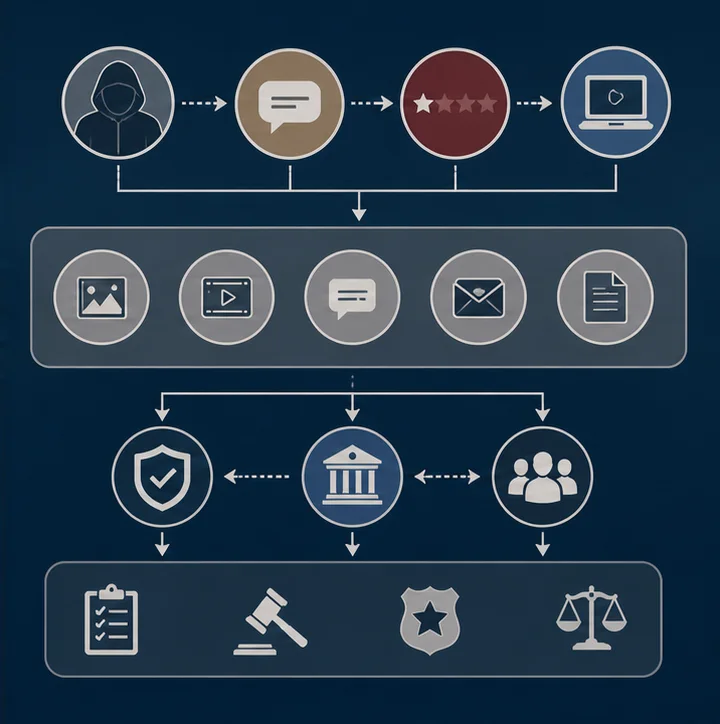
Preserve the full review URL, reviewer profile URL, star rating, exact wording, screenshots, visible edits, images, owner replies, and the timestamps of every relevant message. Then preserve the off-platform demand trail: WhatsApp, SMS, email headers, call notes, social messages, refund requests, discount demands, and any deadline or threat to post more reviews. A usable file should show the link between the demand and the review activity without embellishment.
The internal file should also record customer-search steps, booking or invoice checks, refund history, staff handling notes, and any decision about pausing contact with the author. Keep private records separate from the Google-facing set. The platform report usually needs the clean connection between demand and review. The fuller legal file may need more chronology, more records, and a tighter privacy review than the public thread ever should.
Google Policy And The Local Legal Angle
Google should not be asked to decide a complete extortion or blackmail case, but it can still review harmful conduct through its own reporting channels. The stronger report identifies the exact review, the linked demand, the policy-sensitive behaviour, and the non-confidential evidence that shows why the activity is abusive, deceptive, or not part of a normal customer-review process. The report should stay concrete rather than rhetorical.
Local review should also account for Belgian Criminal Code, defamation provisions and GDPR, Regulation (EU) 2016/679. Those sources matter because the business may later consider a measured legal notice, a broader coercion analysis, or other escalation, but only after the chronology is clean and private data is handled carefully. The public position should stay narrower than the working file while Google, counsel, management, and any insurer read the same core record.

What A Measured Public Reply Usually Says
A measured public response should usually stay short and dull. It may be enough to say that the business takes the matter seriously, is reviewing the communication and the review through the proper channel, and invites contact through an official private route. The reply should not negotiate value, offer concessions in exchange for edits, or confirm private customer facts simply to win the thread.
What the business should usually avoid is calling the reviewer a blackmailer, extortionist, liar, or criminal in public before the file has been reviewed carefully enough to support that allegation. It should also avoid posting screenshots of messages, internal records, or personal data merely to prove pressure. A public reply is part of risk control, not the place to try the whole dispute in front of future customers.
When Escalation Deserves Closer Review
Closer escalation review may be justified where the demand is repeated, the review campaign spreads across several profiles, staff are named, private data is exposed, threats are time-sensitive, or the dispute is already affecting contracts, regulators, lenders, or patient or employee safety. In those files, the internal chronology should become more detailed while the public wording usually becomes even narrower.
No result should be promised. Google removal is not guaranteed, police or regulator action is not automatic, and a demand letter does not execute itself. The stronger strategy is practical and limited: preserve the demand and review together, separate public, platform, and legal versions of the file, and escalate only when the evidence and objective are clear enough to justify the next step.
Related PimLegal Reading
For related reading, see our local guide on platform policy and legal notice strategy and the Belgium Google review removal page. These two internal links connect public-response drafting with the wider removal and escalation strategy in Belgium.
Selected Official References
- Belgian Criminal Code, defamation provisions
- GDPR, Regulation (EU) 2016/679
- Google Business Profile review reporting guidance
- Google prohibited and restricted content policy
- Google legal content removal guidance
Practical Conclusion
A Google review blackmail dispute is strongest when the business freezes the demand, the review, and the timeline before reacting. Preserve first, report through the best Google route, keep the public response boring, and let the fuller legal analysis develop inside a disciplined file rather than inside the review thread.
This article is general information only and not legal advice for a specific dispute in Belgium. Businesses should obtain local advice before making detailed public accusations or sending formal legal notices.