
A practical France guide to preserving incident evidence, separating safety triage from reputation response, applying Google policy and escalating a harmful review proportionately.
Why A Criminal Accusation Review Needs A Different File
A review alleging food poisoning, unsafe premises, contaminated products, negligent treatment, missing safeguards or danger to children or staff should not be handled as an ordinary one-star complaint. In France, the business needs two coordinated but separate files: a genuine incident-and-safety review, and a publication-and-reputation review. A defensible response investigates the safety issue even when the wording appears exaggerated or false.
Labels do not decide the issue. Writing “in my opinion” does not automatically convert a concrete accusation into protected opinion, while a vivid phrase may be obvious exaggeration when read with the star rating, images and surrounding narrative. A disciplined file identifies the implied facts supporting the evaluation, what the reviewer appears to claim first-hand, and what can actually be proved or disproved. That classification guides platform reporting, public response and any legal advice; it does not promise removal or a court outcome.

Evidence Checklist Before Any Public Reply
Open an incident log before drafting a public answer. Record the product, service, location, date, batch or booking, people involved, reported symptoms or hazard, first notice, remedial action and any regulator or insurer contact. Preserve CCTV and system logs lawfully, quarantine relevant material where appropriate, and identify who may alter or delete records. Do not manufacture a clean chronology after the event.
Preserve the complete review URL, reviewer profile, rating, publication date, exact text, photographs, visible edits and every owner reply. Then build a sentence table with four columns: exact words, proposed classification, available proof and proposed action. Useful classifications include verifiable fact, value judgment, rhetorical exaggeration, personal insult, private information, threat, off-topic content and possible fake engagement. Keep the original capture separate from annotated working copies so the evidence remains intelligible.
Match each factual proposition to contemporaneous material: contracts, bookings, invoices, payment and refund records, service logs, messages, policies, staff rosters and lawful CCTV retention. Record gaps as carefully as contradictions. Do not publish confidential customer files merely to win the public argument. If translation matters, preserve the original language and a careful working translation. The Google-facing packet should contain only the shortest non-confidential material needed for the chosen policy category; the fuller chronology belongs in the internal or lawyer file.
Google Policy And The Local Legal Angle
Google says a review is not eligible for removal merely because a business disagrees with it. The policy analysis should therefore remain separate from the local defamation analysis. A genuine but harsh opinion may comply with policy. A review may instead fit fake engagement, misrepresentation, harassment, personal information or another rule when the facts support that category. A legal request is a different route and should identify the exact URL, exact passage, local right relied on and why the requested action is proportionate.
In parallel, local review should consider Loi du 29 juillet 1881 sur la liberte de la presse. That source helps businesses and counsel assess whether the accusation belongs in an ordinary review report, a privacy or harassment report, a legal-removal request, a measured notice or a broader litigation-readiness file. The platform packet should stay short; the fuller legal analysis belongs in the working file.

Public Response Strategy Without Overreaching
A public response should usually stay brief, factual and non-accusatory. It may be enough to say that the business takes serious allegations seriously, cannot verify the accusation against its records, and invites the reviewer to use an official private channel. What the business should usually avoid is publishing confidential records, identifying staff unnecessarily, or accusing the reviewer of lying before the file is complete.
This restraint matters because a criminal accusation dispute can escalate quickly. A careless reply can become a second publication, weaken a later Google appeal, expose private data or make a proportionate legal notice harder to defend. The safest public line is usually narrower than the internal legal line.
When Escalation Deserves Closer Review
Escalate internally when there is a plausible continuing danger, multiple similar reports, injury, a vulnerable person, a regulated service, a threatened regulator complaint, media contact, insurer-notification duties or evidence that may expire. The safety route can require action even if the Google review remains online; the reputation route can require restraint even while an incident investigation continues.
Even then, outcomes should not be promised. Google removal is not guaranteed, criminal enforcement is not automatic and a legal notice is not self-executing. The stronger strategy is to preserve first, classify carefully, keep the public response controlled and escalate only when the exact accusation, the records and the local legal objective are clear enough.
Related PimLegal Reading
For the wider legal framework, read our local guide to civil and criminal defamation rules and the France Google review removal page.
Selected Authoritative References
- Loi du 29 juillet 1881 sur la liberte de la presse
- DGCCRF guidance on fake consumer reviews
- Google Maps prohibited and restricted content policy
- Google Business Profile review reporting guidance
- Google legal content removal guidance
Practical Conclusion
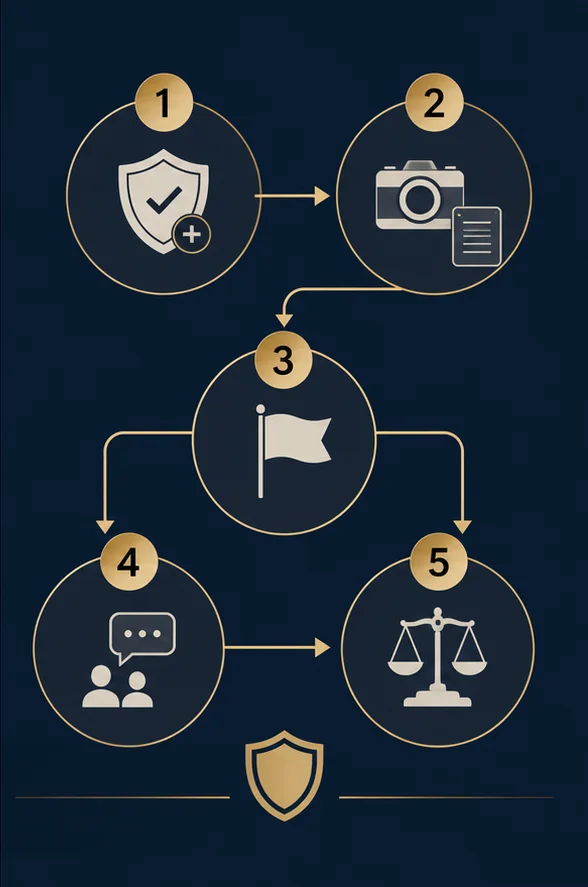
The practical sequence is safety first, evidence second, policy classification third and public or legal escalation last. That order protects customers, preserves a credible record and avoids turning an uncertain incident into a misleading denial. It improves the removal or correction file without guaranteeing that Google, a regulator or a court will act.
This article provides general information only and is not legal advice for a specific dispute in France. Obtain local advice before sending a formal notice, disclosing confidential records, making allegations about a reviewer or assuming that Google, a regulator or a court will act.