
How to align Google policy categories with a Hong Kong legal notice, privacy review and reputation strategy.
Hong Kong Legal Lens
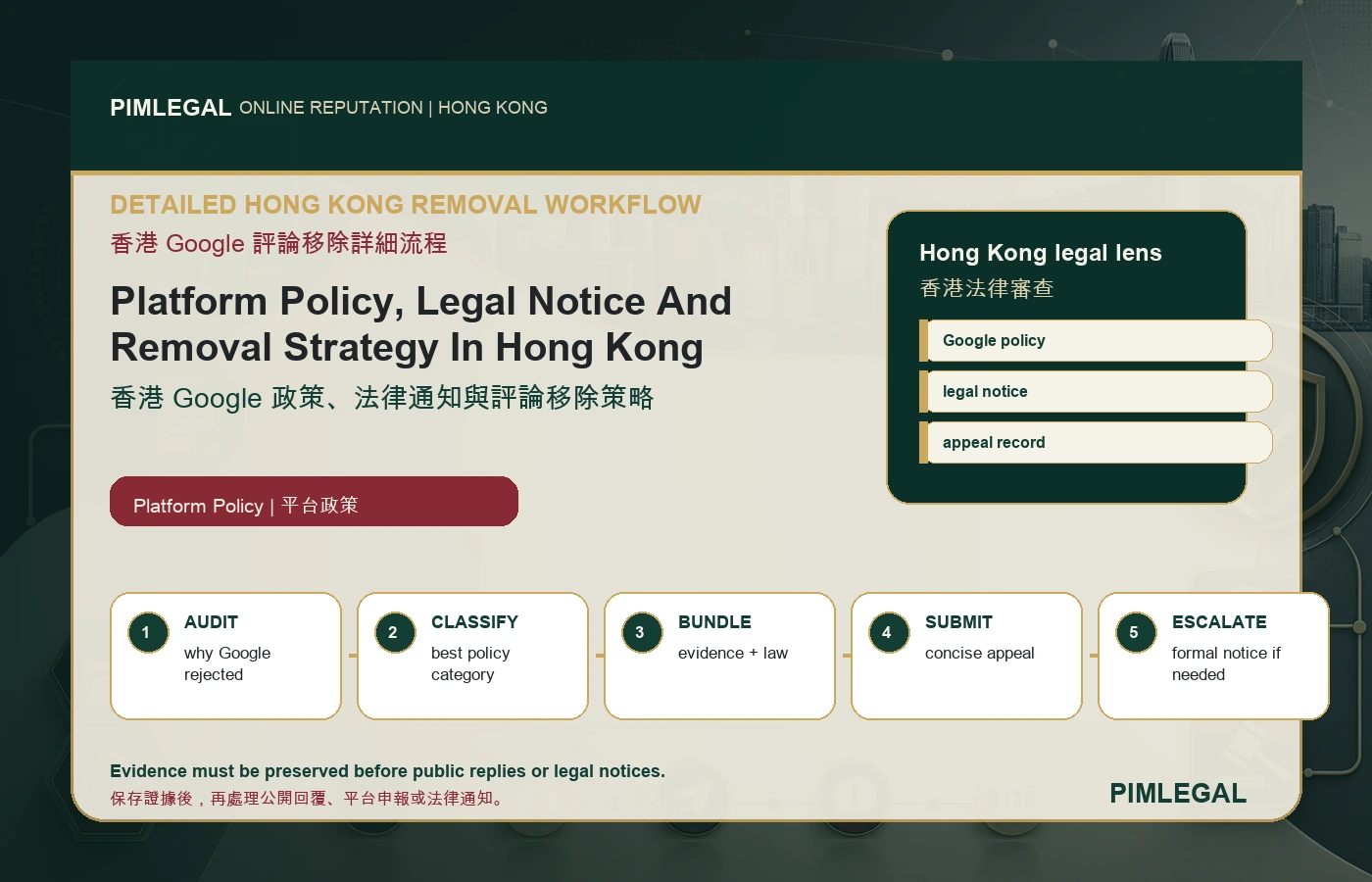
The central issue is how the Google submission, public reply and any Hong Kong legal notice can use the same restrained evidence file. In Hong Kong, a Google review dispute should not be judged by star rating or emotion alone. The file should isolate the exact words, the profile context, the business record, the likely reader meaning, and the Google policy category that best fits the problem.
Hong Kong defamation analysis sits against common law principles and the Defamation Ordinance, Cap. 21. A rough opinion about service is different from a factual allegation that a business forged records, stole money, bribed officials, endangered customers or acted fraudulently. The first drafting task is to separate fact, opinion, insult, privacy exposure and platform abuse before any public reply or legal notice is sent.
Evidence Preservation And Business Records
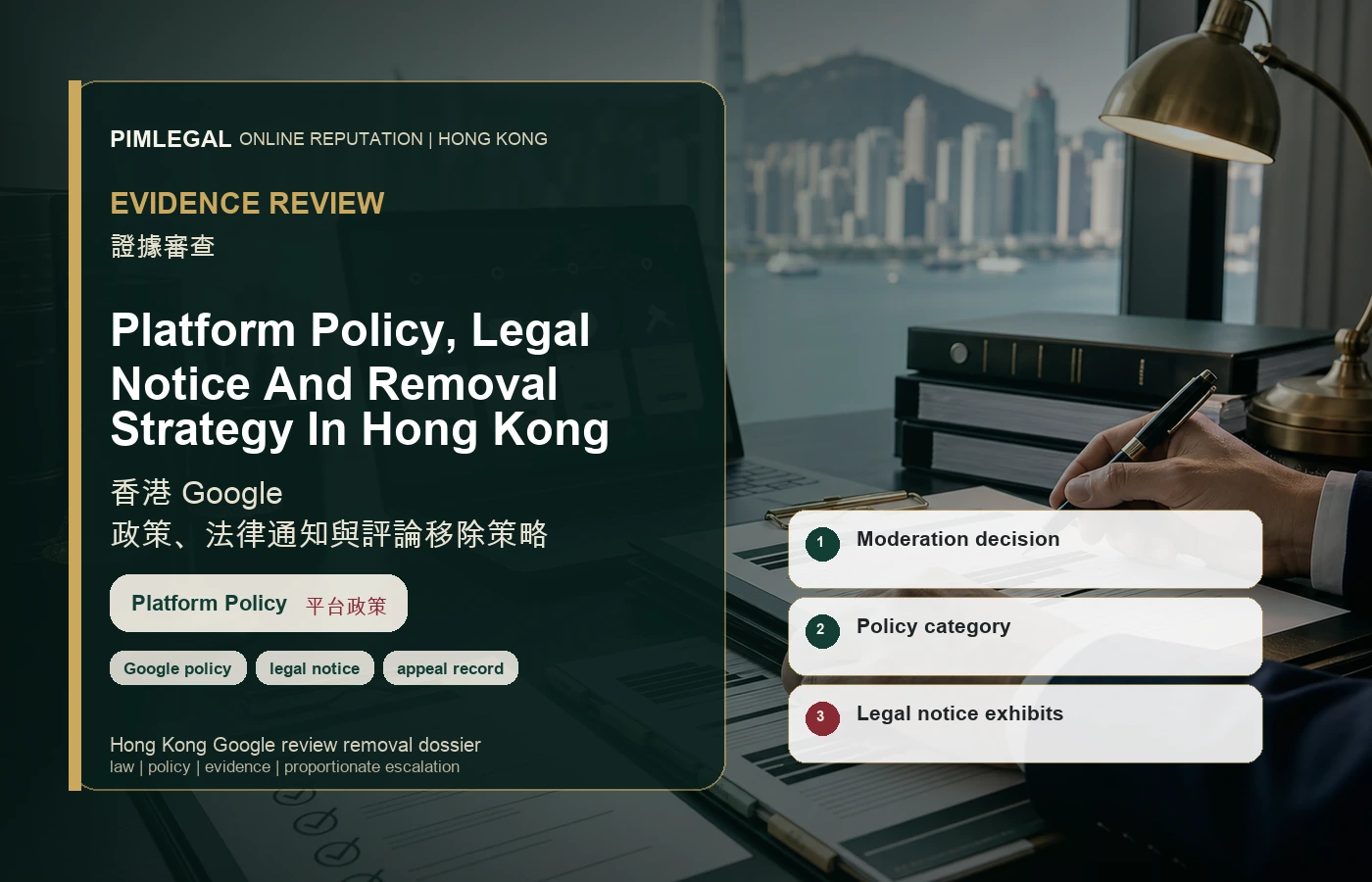
The first step is preservation, not rebuttal. Save the full review URL, reviewer profile link, star rating, text, images, publication date, visible edits, owner responses and Google Business Profile context. If the review mentions a date, staff member, treatment, room, product, refund, contract, invoice or payment, compare that statement with Hong Kong booking records, CRM notes, invoices, messages and internal incident logs.
The working file should have two layers. The Google layer should be concise, non-confidential and category-specific. The legal-review layer can contain the fuller chronology, customer checks, staff records, privacy assessment, harm indicators and correspondence. Those two layers should be consistent, but the business should not upload or publish more private data than necessary to prove the policy point.
Google Policy And Hong Kong Law
Google does not remove reviews simply because they are unfair. The report should use the platform's own categories: fake engagement, conflict of interest, impersonation, personal information, harassment, hate, off-topic content or misleading content where the evidence supports that classification. Hong Kong legal context helps decide whether a notice, preservation request, privacy complaint, counsel review or broader reputation strategy is also proportionate.
Where the review exposes personal data or has a doxxing character, the Personal Data (Privacy) Ordinance, Cap. 486 and the PCPD materials on doxxing and cessation notices are especially relevant. A business should avoid repeating home addresses, private phone numbers, identity details, medical facts, staff schedules or customer information in a public reply, even when the review itself is false or malicious.
Public Response And Escalation
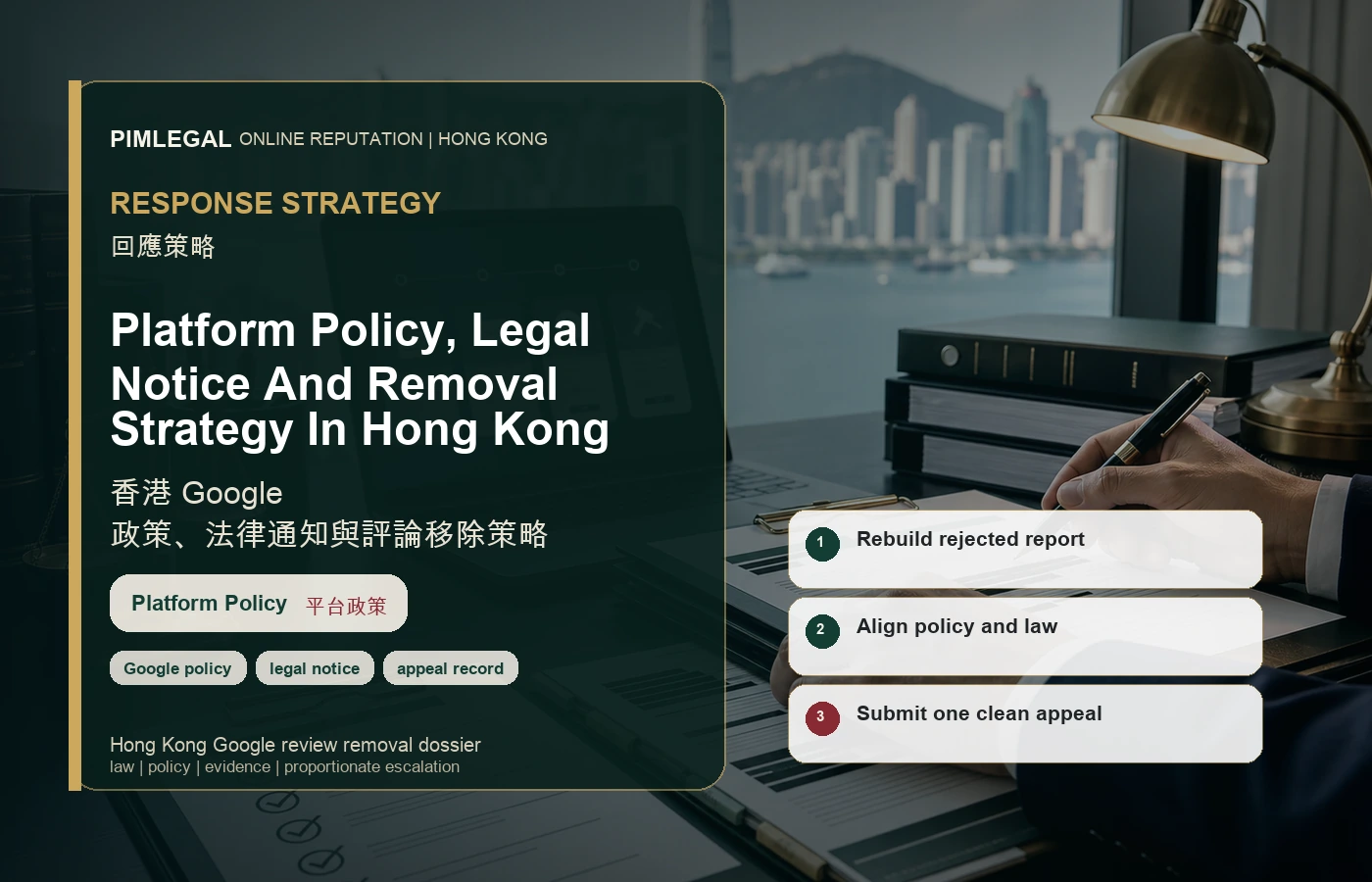
A public reply should reassure readers without turning the review thread into litigation. A restrained reply can say that the business is reviewing the matter through the proper channel, cannot discuss private records publicly, and invites the reviewer to contact an official route. Unless the evidence already supports it, the reply should avoid calling the reviewer a criminal, extortionist, competitor or liar.
Escalation becomes more serious where the review causes measurable business harm, contains serious false factual allegations, exposes personal data, targets staff, appears coordinated, or is linked to a supplier, former employee, agency, competitor or commercial dispute. The next step may be a stronger Google appeal, privacy route, counsel-led letter, negotiation or a wider online-reputation strategy. The right path depends on evidence, proportionality, limitation, jurisdiction, cost and likely counter-risk.
Two Internal Resources
For related reading, see Defamatory Google Reviews And Business Reputation In Hong Kong and Google Review Evidence Preservation In Hong Kong. These two internal resources connect this topic to the wider Hong Kong evidence, platform-reporting and legal-review framework.
Selected Hong Kong References
- Defamation Ordinance, Cap. 21
- Defamation Ordinance section 23 on slander affecting business or professional reputation
- Personal Data (Privacy) Ordinance, Cap. 486
- PCPD Doxxing Offences and cessation notice guidance
- Trade Descriptions Ordinance, Cap. 362
- Hong Kong Customs unfair trade practices overview
- Google Maps prohibited and restricted content policy
Practical Conclusion
The practical Hong Kong strategy is classification before accusation. Preserve the review, test the business records, choose the narrowest Google category, protect personal data, and keep public messaging restrained. This article is general information only and is not legal advice for a specific Hong Kong dispute.