
A practical Mexico guide when a supplier, contractor, agency, franchise partner or other commercially connected person posts a Google review that looks like customer feedback and creates conflict-of-interest risk.
Why Fake Reviews Can Be More Than A Defamation Problem
Some harmful Google reviews do not come from ordinary customers at all. They come from suppliers, contractors, agencies, franchise partners, bidders, procurement counterparties, affiliate businesses or other people with a commercial relationship to the business. In Mexico, that matters because the legal and platform issue is not only whether the words are negative. It is whether a commercially connected person is presenting a business dispute, payment dispute or leverage tactic as if it were neutral consumer feedback.
That distinction changes the file. A supplier or contractor may know internal details, may be partly identifiable from records, and may have a motive tied to payment, termination, pricing, exclusivity, procurement, market access or a wider competitive conflict. The business should therefore test conflict of interest, fake engagement, misleading commercial context and market-integrity issues before it argues about tone or damages.
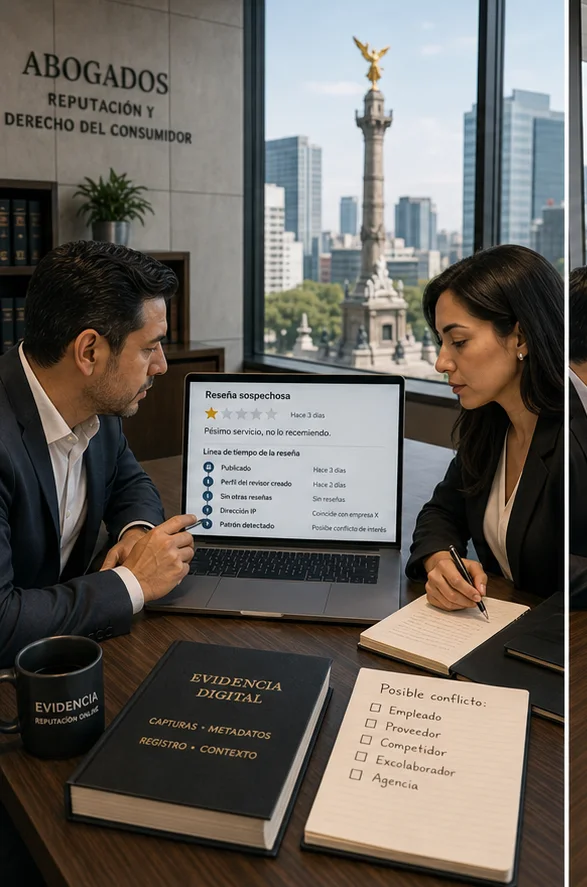
Evidence Checklist Before You Call It Fake
The first evidence task is to connect the review to the commercial relationship without overclaiming. Preserve the review URL, reviewer profile, star rating, text, screenshots, visible edits and timing. Then preserve the commercial file separately: vendor agreement, work order, invoice history, payment dispute, procurement emails, agency scope, account-manager messages, off-platform threats, branch relationship or any record showing why the reviewer may be commercially connected rather than an ordinary customer.
Pattern evidence is often as important as the customer check. Look for repeated wording, unusual timing, newly created profiles, undisclosed employee or agency links, competitor overlap, payment demands or coordinated review waves. Keep suspicion separate from proof. A business should not publicly accuse a competitor, former employee or broker unless the evidence really supports that allegation. Confidential records should stay inside the file, not inside the public reply.
Google Policy And The Consumer-Law Angle
The Google report should not ask the moderator to decide the whole supplier dispute. It should stay narrower: explain why the review appears tied to a commercial relationship, why that relationship was not presented transparently, and which Google category best fits the facts, such as conflict of interest, fake engagement, misleading content or another supported route. The stronger report is factual, short and attached to chronology rather than accusation.
In parallel, the business can assess whether the conduct also fits the local market-integrity context under Mexico Federal Consumer Protection Law. Bought reviews, incentivised testimonials, employee-written praise, undisclosed endorsements or competitor-linked attacks may affect more than reputation. They may also affect consumer trust and fair dealing. That does not mean regulator action or litigation is automatic. It means the business can explain why the conduct is not merely rude criticism.
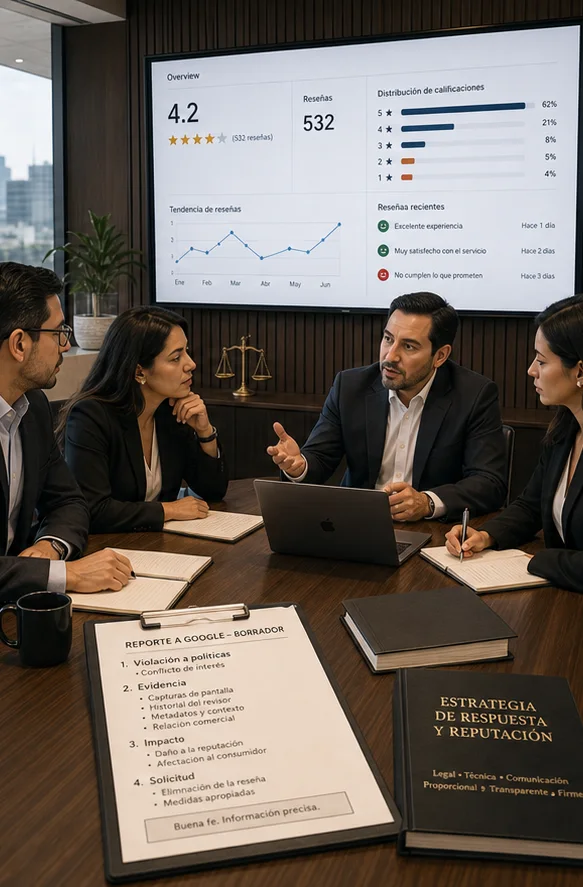
Public Response Strategy Without Overreaching
A public response should avoid confirming more contract detail than necessary. In many files it is safer to say that the business cannot verify the post as a genuine customer experience, that commercially sensitive issues are handled through formal channels, and that the reviewer is invited to use the appropriate private route. Publishing the supplier dispute in public can create a second conflict, reveal negotiation material or undercut the Google report.
Businesses should also avoid answering suspected fake reviews with bad countermeasures of their own: buying positive reviews, encouraging staff or family to post, selectively suppressing real complaints, or threatening action that the file cannot support. Those steps can worsen Google-policy risk, consumer-law exposure and litigation posture at the same time.
When Escalation Becomes More Serious
Escalation deserves closer review when the review appears linked to a current vendor, a former contractor, a marketing agency, a franchise relationship, a procurement fight, a payment-demand chain or a coordinated pressure campaign across profiles. In those files the objective may include more than review removal. It may include preserving the commercial record, checking compliance risk, controlling internal communications and deciding whether a measured notice or local advice is proportionate.
The key caution is not to promise outcomes. Consumer-protection context does not guarantee regulator action. Google policy does not guarantee removal. A legal notice does not guarantee correction. The practical goal is narrower and stronger: preserve a clean record, classify the conduct accurately and keep every step proportionate to the evidence.
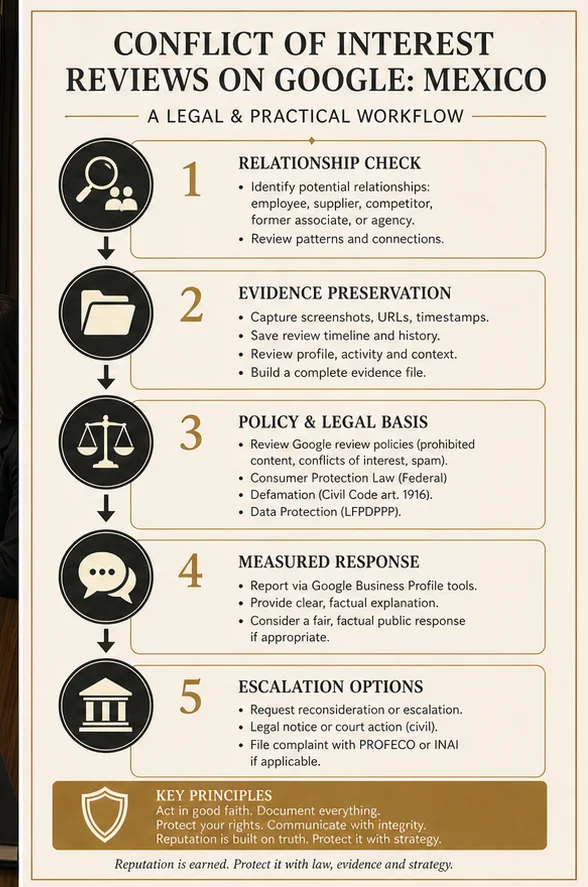
Related PimLegal Reading
For related reading, see our local guide to fake Google reviews and consumer protection and the Mexico Google review removal page. These two internal links connect fake-review proof with the wider removal and escalation strategy in Mexico.
Selected Official References
- Mexico Federal Consumer Protection Law
- Google Business Profile review reporting guidance
- Google prohibited and restricted content policy
- Google legal content removal guidance
Practical Conclusion
A supplier or contractor Google review should be treated as a conflict-of-interest file first and a reputation file second. Preserve the commercial relationship evidence, map the review to the narrowest Google category, keep public replies controlled and escalate only when the facts are strong enough to justify it.
This article is general information only and not legal advice for a specific dispute in Mexico. Businesses should seek local advice before sending formal notices or accusing any person or company of review manipulation.