
Digital transformation is reshaping the way businesses operate. From online sales agreements to employment contracts, companies increasingly rely on digital contracts to save time, reduce paper usage, and streamline operations.
But many business owners ask: “Are electronic signatures legally enforceable in Thailand?” Understanding the legal framework is critical to ensure your digital agreements are binding.
Legal Basis for Electronic Signatures in Thailand
Electronic signatures in Thailand are governed primarily by the Electronic Transactions Act B.E. 2544 (2001). The law establishes that:
- Electronic signatures are legally recognized, provided they meet certain requirements.
- An electronic signature is considered equivalent to a handwritten signature if it identifies the signatory and confirms their intent to sign the document.
- For certain types of contracts, such as real estate transfers or notarized documents, additional formalities may still be required.
This legal foundation ensures that digital contracts can be binding, giving businesses confidence to adopt e-sign solutions.
Types of Electronic Signatures
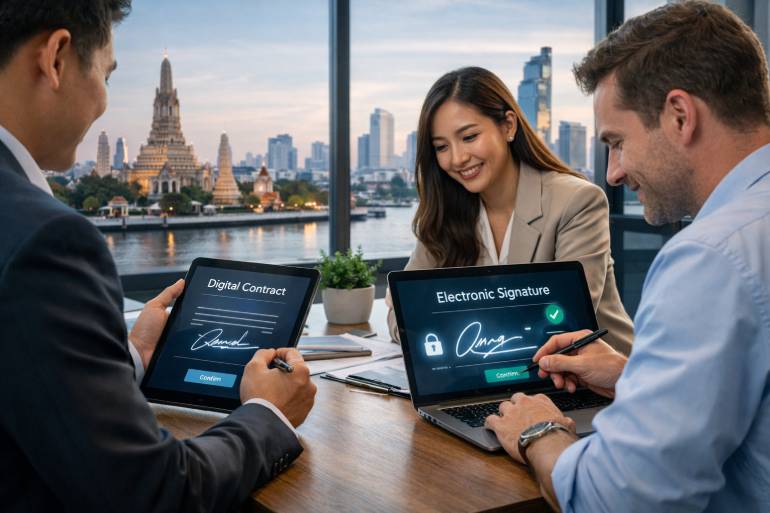
Not all electronic signatures are created equal. In Thailand, the main types are:
- Basic electronic signatures (BES): Simple methods like scanned signatures or tick-box confirmations. Valid but may face scrutiny in disputes.
- Advanced electronic signatures (AES): Use cryptographic methods or secure authentication to verify identity. Stronger evidential value in court.
- Digital signatures: Typically use certificates issued by accredited certification authorities. These provide the highest level of legal certainty.
Choosing the right type depends on the risk, contract value, and enforceability requirements of your agreements.
Requirements for Enforceability
To ensure an electronic signature is legally binding in Thailand, businesses should confirm:
- Intent to sign: The signatory must demonstrate clear agreement to the document.
- Identity verification: The signer must be identifiable, either through authentication or personal data verification.
- Integrity of the document: The content must remain unchanged after signing. Any alterations can invalidate the signature.
- Consent to use electronic means: All parties should agree to transact digitally.
Meeting these requirements minimizes the risk of disputes and strengthens the enforceability of your digital contracts.
Advantages of Using Electronic Signatures
Adopting electronic signatures brings multiple benefits:
- Efficiency: Faster contract execution with no need for physical presence.
- Cost savings: Reduced paper, printing, scanning, and courier expenses.
- Security: Advanced digital signatures use encryption to prevent tampering.
- Audit trail: Many platforms provide logs and timestamps to support legal evidence.
- Environmentally friendly: Supports sustainability initiatives by reducing paper usage.
These advantages make e-signatures an attractive option for both small businesses and large enterprises in Thailand.
Practical Tips for Businesses
- Choose a reputable e-signature platform: Look for Thai law-compliant solutions with secure authentication.
- Verify signer identity: Use multi-factor authentication, ID verification, or certificate authorities where possible.
- Keep digital records: Store signed contracts securely with timestamps for legal evidence.
- Include consent clauses: Make sure all parties explicitly agree to use electronic signatures.
- Understand exceptions: Certain documents (e.g., real estate transfers) may still require wet-ink signatures.
Following these practices ensures that your electronic contracts are enforceable and legally sound.
The Takeaway
Electronic signatures in Thailand are legally binding under the Electronic Transactions Act, provided they meet requirements for intent, identity, document integrity, and consent.
By adopting electronic signatures carefully, businesses can streamline operations, reduce costs, and increase security while remaining fully compliant with Thai law. Digital contracts are no longer just convenient—they are a legally recognized tool for modern business.