
A practical India guide when a Google review targets staff, contains threats, doxxing, intimidation, or repeated abusive pressure that goes beyond ordinary criticism.
Why Threatening Reviews Need A Different Legal Reading
Some Google review disputes are not mainly about whether criticism is unfair. They are about whether the review is being used to frighten staff, expose personal details, invite pile-ons, or create real pressure around mental or physical safety. In India, that kind of file should be handled more carefully than an ordinary one-star complaint. A business still needs evidence discipline, but it also needs to classify the review as a possible harassment, doxxing, privacy, and platform-abuse problem from the first hour.
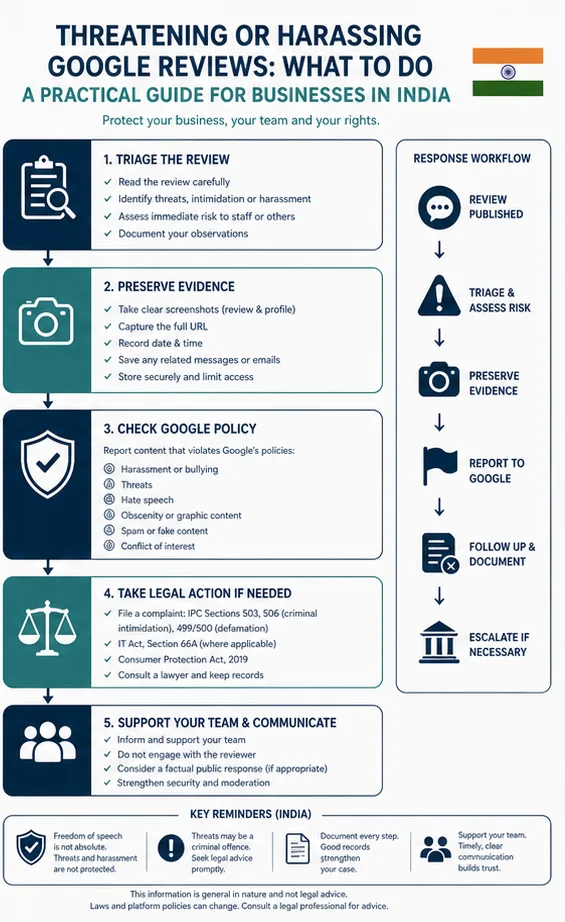
The practical discipline is to separate three questions immediately. First, what exact wording, threat, or identifying detail appears in the review and what surrounding messages exist. Second, which Google policy categories are strongest on the facts: harassment, specific threats of harm, doxxing, personal information, fake engagement, or another prohibited-content route. Third, what local privacy, defamation, workplace-safety, or broader legal risks may justify faster lawyer review without overpromising outcomes. When teams mix those questions together, they often publish the wrong reply, lose key evidence, or weaken a later report.
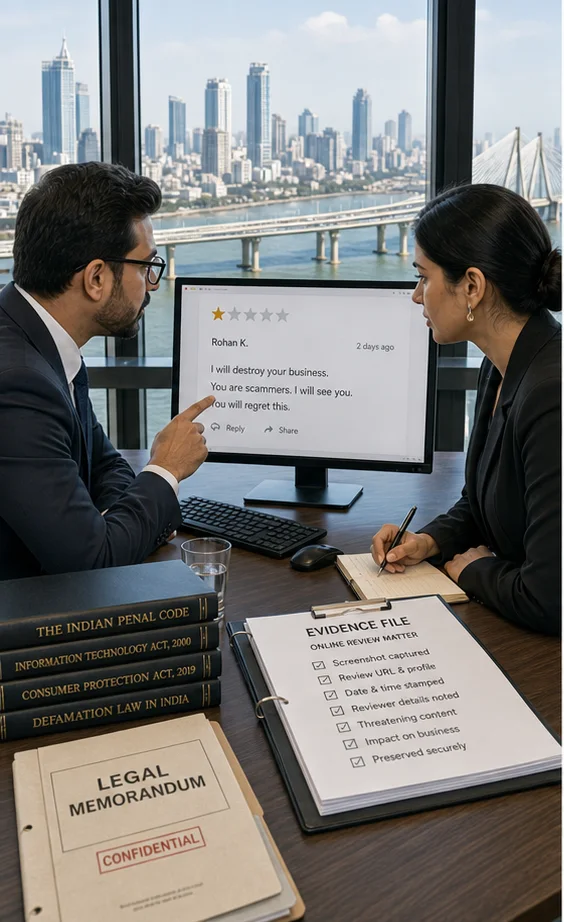
Evidence Checklist Before Anyone Replies
The first task is to preserve the review exactly as it appeared. Save the full URL, reviewer profile, star rating, exact text, images, visible edits, owner replies, timestamps, and the profile position of the review. If the reviewer also sent email, chat, refund demands, booking messages, or off-platform threats, preserve those too with dates and source context. A lawyer-grade file should keep the public review and the off-platform conduct connected, but not confused.
The second task is classification. Mark the passages that name staff, expose private details, threaten future harm, encourage other users to attack, or reveal information that should not stay public. Record whether the business can match the reviewer to a real customer relationship, whether the threat relates to money or leverage, and whether the wording changed over time. If staff are worried about safety, internal notes should record what was reported, by whom, and when. The goal is not drama. It is a clean record that can support a Google report and proportionate local advice.
Google Policy, Reporting, And The Local Privacy Angle
Google policy is highly relevant here because the current Maps policy expressly prohibits harassment, specific threats of harm, doxxing, and the posting of personal information without consent. A strong report should therefore use Google's own categories instead of sending a generic complaint about defamation or unfairness. If the case also involves pressure to pay, change the review, or provide benefits, the business should preserve that angle separately because platform-abuse and extortion reporting may overlap but are not identical.
In parallel, the business should review the file under Digital Personal Data Protection Act, 2023. Even where the review itself is the main problem, privacy controls still matter for screenshots, internal circulation, redaction, and any submission to Google. The safest workflow is to quote only what is necessary, avoid republishing sensitive details in the owner's reply, and keep the Google-facing report aligned with the internal legal file. Local law may also shape how quickly counsel should review threats against named staff or public-facing professionals.

Public Response Strategy Without Escalating The Harm
A public response should usually stay brief, calm, and safety-aware. In many files the safest wording is that the business is reviewing the post through the appropriate channel and invites contact through an official private route. The reply should generally avoid repeating threatening language, confirming unnecessary personal details, or calling the reviewer a criminal, extortionist, or stalker before the evidence file is reviewed. Public anger often gives the abusive reviewer more attention while weakening the platform report.
Internal teams should also avoid false reassurance. If staff have been named or threatened, management should not treat the matter as ordinary reputation housekeeping. At the same time, the response should not promise that Google, the police, a regulator, or a court will definitely act. The correct posture is measured: preserve, classify, report, review locally, and keep outward communications tighter than the internal file.
When Escalation Deserves Faster Counsel Review
Faster review is more appropriate when the review includes a specific threat of harm, doxxing, repeated intimidation, accusations aimed at a named employee, pressure campaigns across multiple platforms, or a pattern showing that the reviewer is not acting like an ordinary dissatisfied customer. Those files may justify a combined strategy: Google reporting, stronger evidence preservation, internal staff-safety measures, privacy-aware correspondence, and local legal advice on the proportionate next step.
The key caution is to stay accurate. Not every harsh or offensive review is a legal threat, and not every alarming post will be removed quickly. But businesses usually improve their position when they preserve the exact words early, connect the public review to surrounding messages, avoid counter-publication, and seek local advice before making accusations or disclosing more material than necessary.
Related PimLegal Reading
For related reading, see our local guide to Google reviews exposing personal data and the India Google review removal page. These two internal resources help connect the privacy issue with the wider removal, response and escalation framework for India.
Selected Official References
- Digital Personal Data Protection Act, 2023
- Google prohibited and restricted content policy
- Google Business Profile review reporting guidance
Practical Conclusion
Where a Google review crosses from criticism into threats, harassment, or staff targeting, the safest strategy in India is disciplined preservation, restrained public wording, precise Google policy reporting, and proportionate local review.
This article is general information only and not legal advice for a specific dispute in India. Businesses should seek local advice before sending formal notices, disclosing records, or assuming that any review will be removed.