
How to connect Google policy categories with proportionate legal action in Japan. In Japan, removal of a harmful Google review is not only a marketing question. It combines reputation protection, statutory analysis, evidence preservation, platform policy, privacy discipline and a proportional legal response. A law firm should not begin by asking how to make the review disappear. It should begin by asking what exactly was published, who could read it, what business records prove, and which remedy is realistic.
For Google policy, legal notice and removal strategy in Japan, the main task is to separate legitimate customer criticism from legally or platform-relevant harm. A customer may describe disappointment, price concerns, delay or poor service. But a reviewer should not publish false allegations of fraud, theft, unsafe conduct, forged records, bribery, professional misconduct, personal data exposure or non-existent customer experiences. The legal strategy must demonstrate that boundary with evidence.

Core Question For This Topic
The question is how Google policy, legal-removal channels, Japanese civil law, criminal-law vocabulary, sender-identification options, a demand notice and a public response fit into one coherent strategy. The answer is stronger when counsel does not argue in generalities. A good assessment quotes the words, describes how an ordinary reader may understand them, connects them to records, identifies harm and decides whether the right route is Google reporting, public response, demand notice, identification, negotiation, litigation or no action.
Japanese Legal Framework: Reputation, Tort, Crime And Platform Evidence
For Google policy, legal notice and removal strategy in Japan, a Japan-focused legal review often begins with the civil route. Article 709 of the Civil Code of Japan is the general tort basis: a person who intentionally or negligently infringes another person's right or legally protected interest may be liable for resulting damage. In a Google review dispute, the practical question is whether the publication infringes a protected reputation or business interest, whether the statement is false or otherwise unlawful, and whether the business can connect the review to harm.
Article 710 of the Civil Code matters because reputational harm is not limited to property loss. A business file should still avoid vague statements such as reputational damage was huge. It should collect concrete indicators: customer questions, cancelled appointments, lost negotiations, staff impact, search-result screenshots, rating movement, review visibility, partner concerns and the cost of mitigation. The stronger the evidence of real impact, the easier it is for counsel to decide whether damages, correction, removal, negotiation or no legal action is proportionate.
Article 723 of the Civil Code is also important in defamation matters because it refers to appropriate measures for recovery of reputation. Businesses sometimes assume the only useful remedy is deletion. In reality, the requested remedy may be deletion, correction, a promise not to repost, publication of corrective wording, damages, preservation of evidence, identification of an anonymous sender, or a court-directed measure. A lawyer should define the remedy before drafting the notice.
Criminal vocabulary can appear in serious Japanese matters. Article 230 of the Penal Code addresses public defamation by alleging facts, while Article 230-2 contains the public-interest and truth framework. Article 231 concerns public insult, and Article 234 may become relevant where conduct obstructs business by force. These references do not make a criminal complaint the default answer to a bad review. They help counsel classify severity and avoid overclaiming.
Anonymous or pseudonymous reviews add a procedural layer. The Provider Liability Limitation Act includes routes concerning disclosure of sender identification information when rights are allegedly violated through online transmission. A business should not assume that Google will simply provide account data after a private request. The file must first show why identification is necessary, why rights appear infringed, and why the requested process is proportionate.
The law-firm method is therefore structured. First, preserve the review and business records. Second, classify each sentence as fact, opinion, legal view, insult, personal information, threat, fake engagement, conflict of interest or irrelevant content. Third, choose the audience: Google moderator, reviewer, organiser, counsel, police, court or future customers reading a public response. A single angry letter cannot serve all of those audiences at once.
Statutory Text To Check Before Escalation
A Japanese Google review file should contain a short statutory map. It is not enough to write defamation in a report box. Counsel should identify which legal concept is actually being invoked and what evidence supports it. The same review can contain several layers: a subjective complaint about waiting time, a factual allegation of theft, a private employee detail, and an organised threat to post more reviews. Each layer may point to a different rule and a different remedy.
- Civil Code Article 709: tort liability for intentional or negligent infringement of rights or legally protected interests.
- Civil Code Article 710: compensation can extend beyond property damage, including reputation-related non-property harm.
- Civil Code Article 723: the court may order appropriate measures to restore reputation in addition to or instead of damages.
- Penal Code Article 230: criminal defamation language where facts are alleged publicly.
- Penal Code Article 230-2: public-interest and truth-related framework for certain alleged facts.
- Penal Code Article 231: public insult, which can matter when a review uses abuse without a factual allegation.
- Penal Code Article 234: business obstruction vocabulary, relevant only when the evidence shows more than ordinary criticism.
- Provider Liability Limitation Act Articles 5 to 8: sender-identification and disclosure-order context for online rights violations.
The practical drafting point is simple: do not cite every article in every letter. Use the statutory map to decide the strongest route. If the review is a fake customer post, the Google route may be fake engagement plus a short evidence summary. If the review alleges fraud, the legal notice may focus on Civil Code tort, factual falsity and harm. If the post contains only insults, counsel may consider whether the insult is legally meaningful or whether a public response is more realistic.
This statutory review also reduces risk for the business. A notice that threatens criminal action without basis may look intimidating rather than credible. A platform report that cites law but fails to identify a Google policy category may be rejected. A public reply that quotes legal articles can look heavy-handed to customers. The strongest strategy uses law where law is needed and uses platform policy where a platform moderator must act.
Japanese Jurisprudence: Fact, Opinion, Social Reputation And Public Interest
Japanese Supreme Court materials are useful because Google review disputes often turn on meaning. In the Supreme Court judgment of May 27, 1997, the court discussed whether a publication undermines the evaluation a person receives in society and emphasised ordinary readers' understanding. For business reviews, that means counsel should ask how an ordinary customer would read the words in context, not how management emotionally experiences them.
The Supreme Court judgment of September 9, 1998 is especially practical for review work because it distinguishes allegations of fact from opinions or criticism based on facts. A review may look like opinion but still imply a specific factual assertion that can be proved or disproved. For example, 'this clinic is unsafe because it reused instruments on March 3' is not merely taste or dissatisfaction. It points to a verifiable event.
The Supreme Court judgment of July 15, 2004 helps with another common problem: legal characterisations. Calling conduct illegal, fraudulent, negligent or a breach of law may sometimes be a legal view or opinion, but it may also carry implied factual assertions. A demand letter should separate the factual core from the legal conclusion. That is why a review table should list exact words, implied facts, evidence, legal classification and Google policy category.
Older Japanese defamation jurisprudence referenced in these Supreme Court decisions also reinforces a public-interest and truth analysis. In practice, a commercial Google review may not be a newspaper article, but the same discipline matters: identify what was published, whether it concerns an identifiable business, whether it lowers social evaluation, whether the disputed meaning is factual or opinion, whether there is truth or reasonable basis, and whether the response sought is proportionate.
The jurisprudence does not mean every harsh review can be removed. Japan protects space for criticism and opinion. A business that treats every one-star review as defamation will overreach. But a review that accuses a business of crimes, forged documents, regulatory breaches, unsafe conduct, bribery, theft or fabricated professional qualifications may call for a lawyer-led review when those allegations are false, identifiable and commercially harmful.
Digital Evidence In Japan: Capture, Translation And Chain Of Custody
The file must distinguish admitted facts, disputed factual allegations, private information, threats, customer relationship, harm, Google policy category and legal basis. A mixed review is rarely solved by one generic complaint. A screenshot without a URL, date and page context is weak. A cropped screenshot that omits the business profile, reviewer name, rating, sorting context and surrounding interface may not prove enough. Capture the review as it appears on Google Search and Maps where possible, because visibility and audience matter to reputation harm.
Create a capture package. Save the review URL, the reviewer profile URL, the visible text, rating, date, photos, owner replies, likes or edits, the device and browser used, the time of capture and the name of the person who captured it. Keep the original image files and working copies separate. If the review is in Japanese, English or another language, preserve the original wording and prepare a translation note rather than replacing the original with a paraphrase.
Then conduct internal verification. Search reservation systems, point-of-sale data, CRM, patient or client records, call logs, chat systems, invoices, emails, complaint registers, delivery records and employee schedules. Record negative results too. No matching booking, no customer record, impossible date, no product line, no staff member by that name or no complaint history can be important when alleging fake engagement or factual impossibility.
Privacy and confidentiality need separate handling. A business should not upload sensitive customer, patient, employee, payment or passport information to a platform report. For Google, a non-confidential summary is often better: the reviewer name does not match any record, the service was not offered, the branch was closed, the allegation contradicts invoice records, or the review contains private information. The full exhibit file can be kept for counsel.
If the author is anonymous, evidence preservation becomes even more important. Counsel may later consider sender-identification or disclosure procedures, but those options are stronger when the business can show an apparent rights violation, necessity, proportionality and a clean record of the disputed content. Waiting until the review is edited or deleted can make identification and proof more difficult.
Japan Case Study: National Service Provider After A Rejected Google Report
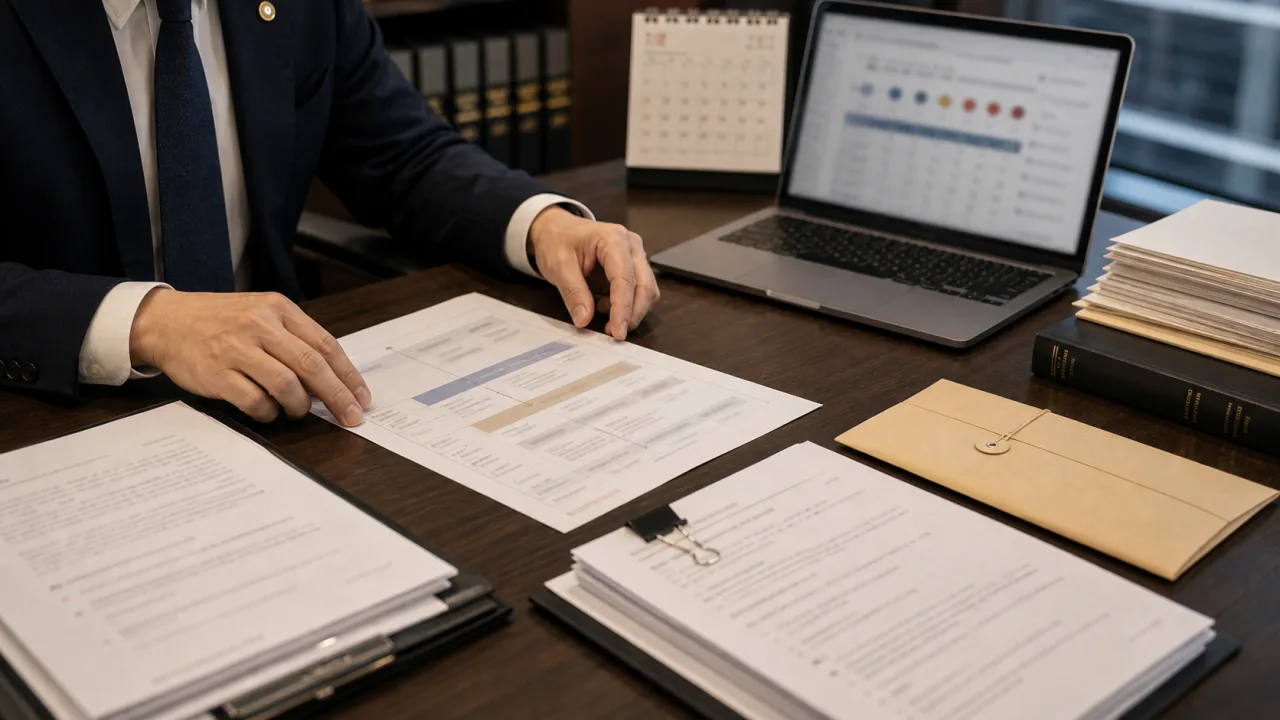
A Japanese service provider receives a review combining a real service complaint, a provably false bribery allegation, personal information about a staff member and a threat to organise more negative reviews unless money is refunded. The first standard Google report is rejected. The first mistake would be to post an angry reply. The second mistake would be to send Google a vague complaint saying the review is illegal. The third mistake would be to accuse a competitor or former employee without proving attribution. A Japan-focused legal file should slow the reaction down just enough to make the evidence usable.
The business should assign one internal owner for the file. That person collects the review captures, checks records, asks staff not to contact the reviewer informally, and keeps a dated log of every action. Counsel can then review the words sentence by sentence. Some parts may be protected dissatisfaction. Some parts may be factual allegations. Some parts may expose personal information. Some parts may indicate fake engagement or a coordinated attack.
The first Google submission should be short. It should identify the review URL, the profile, the exact passages, the relevant Google policy category, the non-confidential proof and the requested action. If there is no matching customer record, say what systems were checked. If the alleged service does not exist, say so. If the post contains private information, identify the category without repeating more private data than necessary.
In parallel, counsel can prepare a demand notice. It may not be sent immediately if the author is unknown or attribution is uncertain. But drafting it helps structure the legal analysis: publication place, exact words, factual correction, evidence summary, legal basis, harm, requested remedy, preservation demand and deadline. The notice can later be adapted for a known reviewer, organiser, business counterpart or counsel-to-counsel communication.
The case-study conclusion is practical. A business in Japan should not choose between law and Google policy too early. It should build one factual matrix and then use different documents for different readers. Google needs a policy report. The reviewer may need a precise notice. Management needs a risk recommendation. A court or disclosure process needs evidence that can survive scrutiny.
Google Strategy And Japan Demand Notice
A second Google route must be sharper than the first. It should identify exact sentences, policy categories, profile URLs, chronology and non-confidential evidence showing why the review is not ordinary dissatisfaction. Google's own guidance says businesses may report reviews that violate policy, but not every disliked review is eligible for removal. The Google Business Profile review reporting page is therefore only useful when the facts fit a policy route. A legal conclusion alone is not enough for a platform moderator.
The relevant policy vocabulary comes from Google Maps prohibited and restricted content policies. The common categories in Japan review disputes include fake engagement, misrepresentation, harassment, personal information, off-topic content and conflict of interest. A strong submission names the category and explains the evidence in short points. It does not ask Google to adjudicate every element of Japanese defamation law.
Some matters may require a legal-removal route rather than only the Business Profile report. The Google Legal Help Center may be relevant where the issue is court order, legal claim, personal information, intellectual property or another legal-removal category. That route should not be used as a shortcut around weak proof. It is most effective when the submission attaches or summarises a clear legal basis and targeted evidence.
The demand notice should be readable by the author, Google, opposing counsel and a court: publication place, URL, date, contested words, evidence of falsity, requested action, preservation demand, no-reposting request and deadline. The notice should not publish confidential documents or make threats for leverage. It should be accurate enough that it can later be shown to Google, opposing counsel or a court without embarrassment. It may ask the recipient to preserve messages, drafts, instructions, account data, payment records or communications with third parties, to the extent lawful and relevant.
If Google refuses removal, the next step is not necessarily to repeat the same report. Counsel should read the refusal, test whether the policy category was wrong, add missing evidence, remove overbroad legal argument, consider a privacy or legal-removal route, or decide that the better route is a demand notice, public response, identification process or litigation. Repeating a weak report can waste time while the review remains visible.
Practical Advice For Management And Counsel
A strong strategy does not use legal threats as a standard reputation-management script. It chooses the lightest effective route that limits harm, preserves evidence and remains proportionate. The public reply is for future readers. It should not be a litigation letter. It should be calm, short, privacy-safe and consistent with the evidence file. A reply that calls the reviewer a liar, competitor, criminal or extortionist may create new risk unless counsel has verified the facts and approved the wording.
Management should also control staff conduct. Do not ask employees to mass-report the review with inconsistent stories. Do not ask loyal customers to post counter-reviews as a revenge tactic. Do not delete internal correspondence that may explain the dispute. Do not pressure a real customer to remove honest criticism. A business that behaves carefully from the first day is easier to defend.
This article should be read with response strategy for harmful Google reviews in Japan and evidence file for suspicious customer reviews in Japan. Those two internal links are deliberately chosen: they connect this Japan-specific article with the evidence, Google reporting, public-response and legal-escalation pages that a business usually needs next.
The strongest Japan files are built in layers. The evidence layer proves what happened and what did not happen. The legal layer classifies tort, defamation, insult, business obstruction, privacy or sender-identification issues. The platform layer connects facts to Google policy. The communication layer decides whether customers need a public response. When those layers are separated, the strategy becomes calmer and more effective.
Law-Firm Checklist
- Preserve the Google review URL, profile URL, date, rating, full text, images, owner replies and Business Profile context.
- Keep the original Japanese or English wording and prepare a translation note if the review is multilingual.
- Search reservations, invoices, CRM, payment data, complaints, messages and staff schedules before alleging fake engagement.
- Classify every sentence as fact, opinion, legal view, insult, personal information, threat, fake engagement or off-topic content.
- Keep the Google report, public response, demand notice and litigation file consistent but separate.
- Do not upload sensitive customer, patient, employee or payment records to a general platform report.
- Use Japanese statutory references and Supreme Court jurisprudence to test fact, opinion, social reputation and proportionality.
- Choose the lightest effective route: monitor, reply, report, appeal, notice, identify, negotiate, litigate or refer for criminal assessment.
References And Further Reading
- Civil Code of Japan Articles 709, 710 and 723 for tort, non-property damages and recovery in defamation.
- Penal Code of Japan Articles 230, 230-2, 231 and 234 for defamation, public-interest truth framework, insult and business-obstruction vocabulary.
- Provider Liability Limitation Act for sender-identification and disclosure-order context.
- Supreme Court of Japan, May 27, 1997, September 9, 1998 and July 15, 2004 for social reputation, ordinary-reader meaning, fact versus opinion and legal-view analysis.
- Google Business Profile review reporting guidance and Google Maps prohibited and restricted content policies for the platform route.
- Google Legal Help Center for legal-removal pathways where a platform-policy report is not the right channel.
This article is general information only. It is not legal advice for a specific Japanese dispute. Before sending a formal notice, filing a platform legal request, seeking sender identification, making a criminal complaint or starting litigation, the facts, evidence, jurisdiction, privacy risks, limitation periods and proportionality should be reviewed by qualified counsel.