
Many businesses think that having “Terms and Conditions” on their website is enough to cover all legal bases. But here’s the catch — website terms and service agreements are not the same thing. In 2025, when online businesses, apps, and digital services are growing faster than ever, knowing the difference between these two documents can make or break your legal protection.
Both documents set expectations and define relationships — but they serve very different purposes. One governs how visitors use your website; the other governs how clients use your services. Confusing the two can expose your business to unnecessary risks, disputes, or even regulatory penalties.
What Are Website Terms (Terms and Conditions)?
Website Terms and Conditions (T&Cs) act as a rulebook for anyone who visits or uses your website. They typically define:
- Permitted and prohibited uses of your website content and materials.
- Intellectual property rights (who owns your logo, images, or written content).
- Disclaimers and liability limits to protect your business from misuse or technical issues.
- Governing law and dispute resolution.
Think of T&Cs as your digital fence — they outline what users can and cannot do within your online space. These terms help prevent misuse of your site, protect your brand assets, and limit your exposure to lawsuits arising from user-generated content or data breaches.
For e-commerce websites, T&Cs may also include return policies, delivery terms, and payment conditions, ensuring transparency and legal compliance.
What Are Service Agreements?
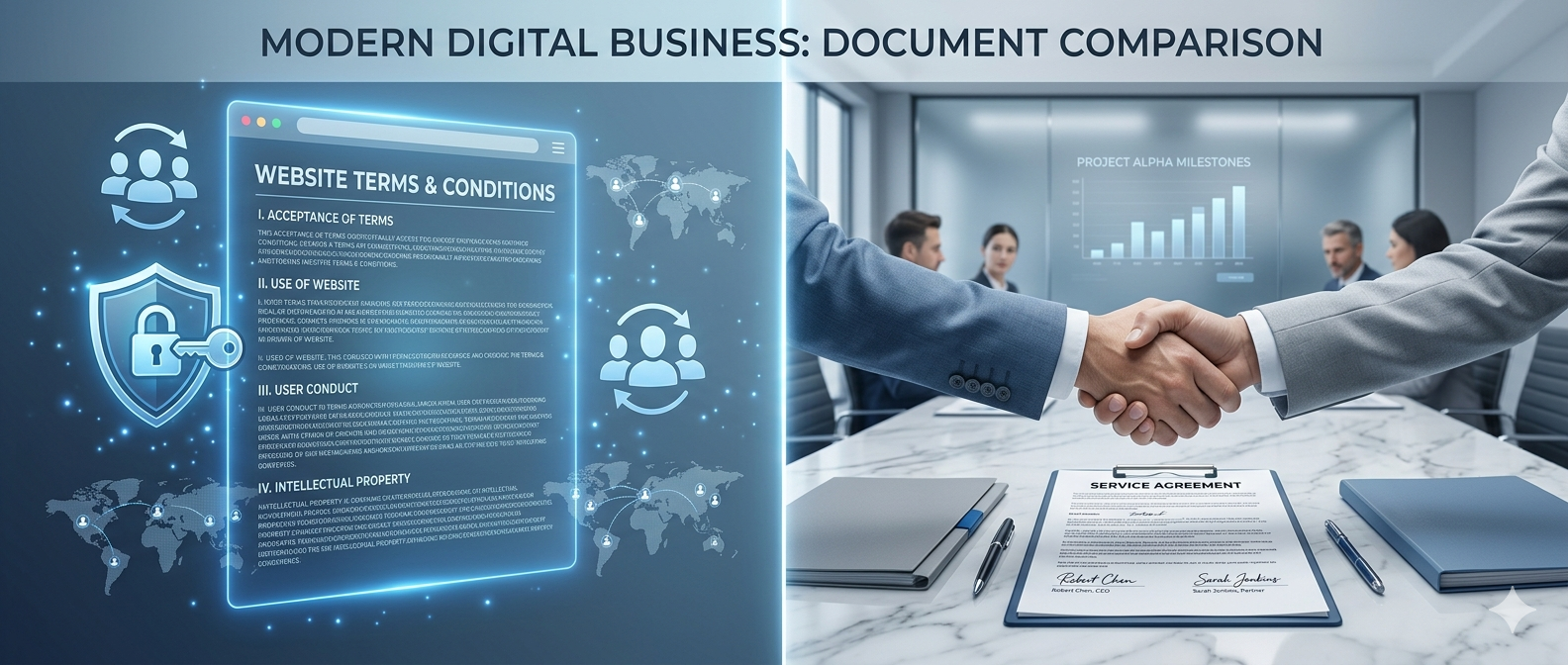
A Service Agreement is a contract between you and your paying clients. It outlines the scope of work, pricing, deadlines, responsibilities, and remedies if things go wrong.
It typically covers:
- Scope of Services: What you are providing (consulting, design, development, marketing, etc.).
- Payment Terms: How and when invoices are issued and paid.
- Confidentiality: How sensitive or proprietary information is handled.
- Termination Clauses: How either party can end the agreement.
- Liability and Indemnity: Responsibility in case of damages or losses.
A well-drafted service agreement protects both sides by defining expectations clearly and ensuring fair dispute resolution.
Key Legal Differences You Need to Know
| Aspect | Website Terms | Service Agreement |
|---|---|---|
| Who It Covers | All website visitors or users | Specific clients or customers |
| Purpose | Protect online presence and intellectual property | Define business relationship and obligations |
| Format | Online acceptance (click-wrap / browse-wrap) | Signed or electronically agreed contract |
| Legal Weight | Enforceable if properly displayed and accepted | Enforceable as formal contract |
| Example Use | Websites, apps, online platforms | Freelance, agency, or B2B services |
In simple terms: Website Terms protect your site. Service Agreements protect your business.
Why Both Are Crucial in 2025
With the growing shift toward digital operations and global clients, legal compliance is becoming more complex. In 2025, laws around data privacy, online payments, and cross-border transactions are tightening — especially under frameworks like GDPR, CCPA, and PDPA.
Without properly drafted website terms, you risk non-compliance with privacy laws or user consent requirements. Without a clear service agreement, disputes may arise over deliverables, refunds, or ownership of work.
Having both documents professionally drafted ensures your business remains compliant, transparent, and protected.
Common Mistakes Businesses Make
- Copying legal documents from competitors instead of tailoring them to your business.
- Using website terms as a substitute for service contracts.
- Failing to update legal documents regularly.
- Ignoring privacy policies and data protection requirements.
Investing in properly drafted legal documents builds trust and reduces risk.
Conclusion: Protect Both Your Digital Presence and Your Business
In today’s digital-first economy, your website and your services are often connected — but the legal documents that govern them must remain separate.
- Website Terms: Protect your online space and define user behavior.
- Service Agreements: Protect your business relationships and income.
Neglecting either document exposes your business to unnecessary risk. In 2025’s digital landscape, having both properly drafted and updated is essential for long-term protection.