
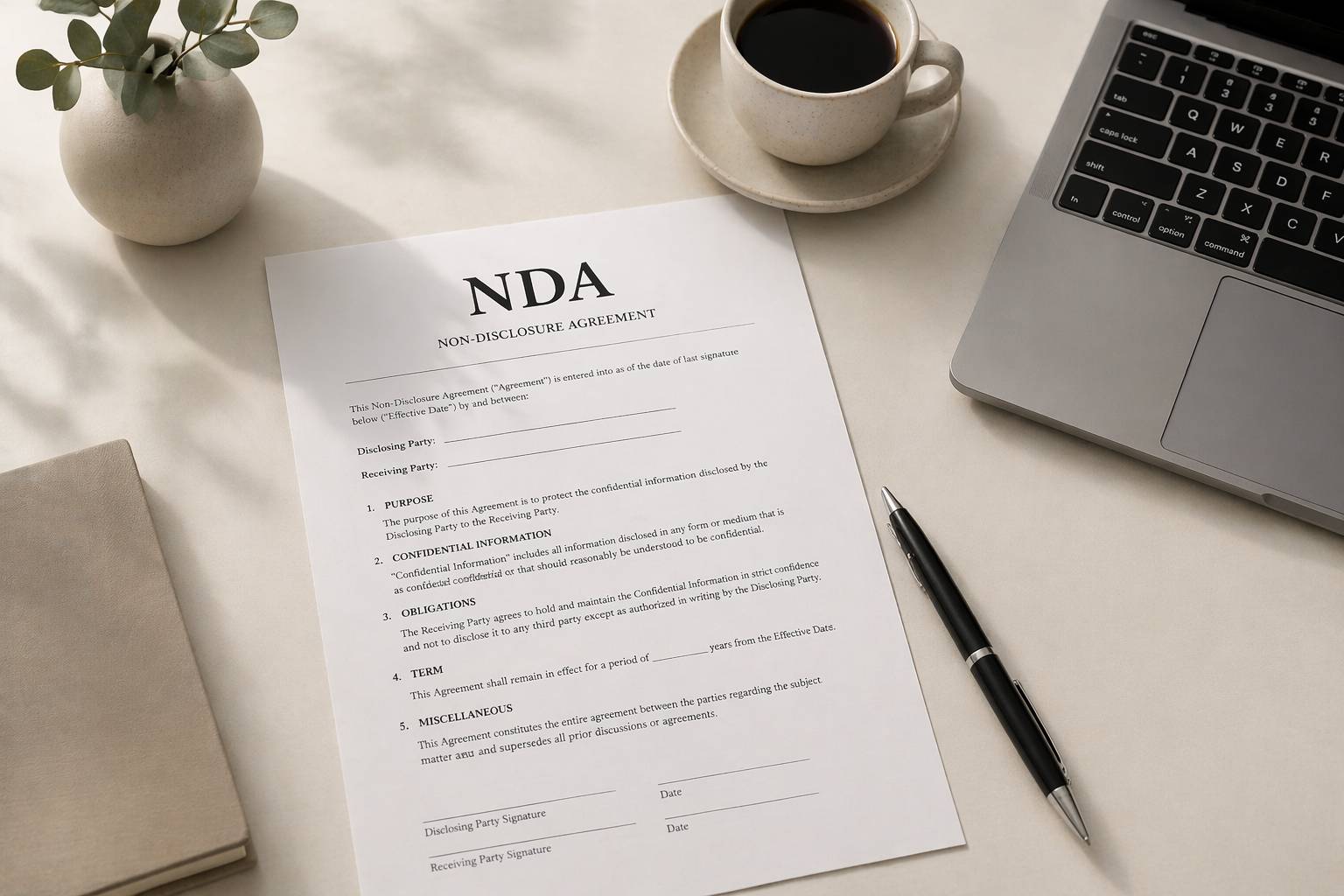
Non-Disclosure Agreements (NDAs) are crucial for businesses looking to protect sensitive information in partnerships, employment, or vendor relationships. Startups, tech companies, and creative businesses use NDAs to safeguard:
- Business strategies and plans
- Product designs or prototypes
- Financial and marketing information
- Client lists or supplier data
While NDAs are enforceable under Thai law, their effectiveness depends on careful drafting and clear terms.
Key Elements of an Effective NDA

Define Confidential Information Clearly
Ambiguous definitions can render NDAs unenforceable. Specify what is confidential, such as:
- Trade secrets and formulas
- Technical data or software
- Business processes and strategies
- Financial and operational information
Include exclusions like public knowledge or pre-existing knowledge.
Purpose Limitation
Specify how the recipient can use the information:
- Evaluating a partnership
- Performing services under contract
- Conducting due diligence
Purpose limitation ensures information isn’t misused outside the agreed scope.
Duration of Confidentiality
Set a reasonable timeframe for confidentiality obligations, often 2–5 years depending on the sensitivity of the information.
Recipient Obligations
Outline the recipient’s responsibilities:
- Restricting access to authorized personnel
- Protecting information with reasonable security measures
- Using data solely for the stated purpose
Clear obligations strengthen enforceability in court.
Remedies for Breach
Include remedies such as:
- Injunctions to prevent disclosure
- Compensation for damages
- Legal enforcement measures
Specifying remedies signals the seriousness of the NDA and helps protect your rights.
Governing Law and Jurisdiction
Specify that the NDA is governed by Thai law and designate the forum for dispute resolution to ensure enforceability locally.
Common Mistakes to Avoid
- Overly broad NDAs – may be deemed unenforceable.
- Vague definitions of confidential information – weakens protection.
- No purpose limitation – allows misuse.
- Using foreign templates without local adaptation – may not comply with Thai law.
- Unrealistic or undefined durations – could be struck down in court.
Practical Tips for NDAs in Thailand
- Tailor NDAs to your business – Use industry-specific terms.
- Engage local legal counsel – Ensure compliance with Thai laws.
- Educate recipients – Make sure employees or partners understand their obligations.
- Review regularly – Update NDAs for changes in law or business needs.
- Maintain records – Track disclosures and agreements to strengthen enforceability.
The Takeaway
NDAs are a powerful tool to protect your ideas and sensitive information in Thailand. A well-drafted NDA should:
- Clearly define what is confidential
- Specify purpose and duration
- Outline recipient obligations and remedies
- Comply with Thai law and jurisdiction requirements
Properly structured NDAs prevent leaks, protect your intellectual property, and demonstrate professionalism, giving businesses confidence when sharing sensitive information.