
How local civil, criminal and procedural rules can shape an online review dispute in Philippines. In the Philippines, a harmful Google review should be treated as a legal and evidentiary event before it is treated as a public-relations problem. A review can be lawful consumer criticism, but it can also contain false factual allegations, fake engagement, personal data, harassment, threats or coordinated commercial pressure. Pimlegal's approach is to classify the words, preserve the proof and choose the least risky route.
For civil, criminal and cyber-libel rules for Philippine Google review disputes, the first task is not to promise deletion. The first task is to build a file that can be read by Google, the reviewer, opposing counsel and a Philippine court if the matter escalates. The same review may require platform reporting, a short public response, a demand letter, cyber-libel analysis, a data-privacy assessment or a decision to take no action.
This article should be read with legal notice and Google removal strategy and responding to harmful Google reviews. Those two internal resources connect the article-specific legal analysis with evidence, Google reporting, public response and escalation strategy.

Philippines Case Study: Quezon City Contractor Accused Of Criminal Conduct
Assume the client matter begins this way: A Quezon City contractor is accused in a Google review of stealing deposits, using fake permits and threatening homeowners. The reviewer may be a real customer, but the records show a completed project, signed variation orders, unresolved warranty complaints and no permit fraud. A law firm should not start by calling the reviewer a criminal or by sending an emotional threat. Counsel should first create a review matrix with four columns: exact words, business records, Google policy category and Philippine legal risk. That matrix keeps the business from mixing anger with proof.
The question is which route fits the objective: Google removal, public reassurance, private correction, civil damages, cyber-libel complaint assessment, injunction strategy, settlement or no action. The practical distinction is important because future customers read a Google Business Profile quickly. If the review alleges a verifiable event that did not happen, the business needs records. If it expresses dissatisfaction, the better strategy may be service recovery or a controlled public response rather than defamation escalation.
The case study should also identify who is harmed. A review may attack the company, a named owner, a doctor, dentist, lawyer, engineer, hotel manager or employee. Philippine libel analysis can protect a natural or juridical person, but the evidence must show how the review identifies the complainant and how an ordinary reader would understand the imputation in context.
Philippine Defamation And Cyber-Libel Framework
The starting statute is the Revised Penal Code. Article 353 defines libel around a public and malicious imputation that dishonors, discredits or causes contempt toward a natural or juridical person. Articles 354 and 355 then matter because Google reviews are written public statements and because malice, truth, good motive, justifiable ends and the means of publication can all affect risk analysis.
For a business review, counsel should not treat every unpleasant sentence as libel. The test begins sentence by sentence. Is the statement factual or opinion? Does it accuse the business of a crime, vice, defect, professional incompetence, unsafe practice, fraud, theft, corruption, discrimination or privacy breach? Can the allegation be proved true or false? Does the review identify the business or a specific professional? Does the publication create reputational or commercial harm?
Cyber context is supplied by Republic Act No. 10175. Section 4(c)(4) covers libel as defined in Article 355 when committed through a computer system or similar means, and Section 6 raises the penalty by one degree for crimes committed through information and communications technology. That is why a Google review file in the Philippines is not only a customer-service issue; the medium itself can change the legal risk.
That higher risk does not make prosecution the default business tool. Criminal defamation language should be reserved for serious, false and reputationally material allegations. In many matters, a proportionate sequence is better: preserve evidence, submit a focused Google report, consider a privacy-safe public reply, send a disciplined demand letter if the author or organiser is known, and involve Philippine counsel before any complaint or court route.
Privacy also matters. Under Republic Act No. 10173, the Data Privacy Act, personal information and sensitive personal information must be handled with transparency, legitimate purpose and proportionality. A review that exposes a staff member's phone number, a patient's condition, a customer's ID details, a private address or account information may raise a separate privacy issue. The business should not solve that problem by uploading more private material to Google.
Civil strategy may also examine damages, abuse of rights, unfair competition, interference with business relations and injunctive relief depending on the facts. Those routes are different from a Google report. A platform report asks whether a review violates product rules. A legal notice asks the author to remove, correct, preserve and stop harmful conduct. A court filing asks a tribunal to decide liability or grant relief. Mixing those audiences creates weaker documents.
Philippine Jurisprudence To Use With Care
Disini v. Secretary of Justice remains a core cybercrime decision. For review-removal work, its practical lesson is that cyber libel survived constitutional challenge, but the analysis must still respect speech, statutory limits and the specific role of the original online publication. A law-firm submission should not cite Disini as if it automatically makes every negative review illegal.
Causing v. People is important for timing. The Supreme Court treated cyber libel as libel committed through a computer system and applied a one-year prescriptive period counted from discovery by the offended party, authorities or agents. For businesses, this makes discovery records practical: note when management first saw the review, who saw it, where it appeared and what was captured that day.
People v. Soliman is useful when management asks whether online libel always means imprisonment. The case discusses online libel under RA 10175 and Article 355, including penalty analysis and the alternative of a fine in the case before the Court. The business takeaway is not to trivialize the offense, but to keep proportionality and procedure visible from the start.
Penalosa v. Ocampo is a reminder that online speech cases can turn on timing, procedure and strict construction of criminal statutes. Review disputes are often urgent, but urgent does not mean loose. A lawyer should check publication date, discovery date, applicable law, author identity, exact wording and remedy before writing a notice that assumes liability is obvious.
These authorities should be used as a legal framework, not as decoration. A citation to cyber-libel jurisprudence will not save a weak factual file. If the review is mostly opinion, if the business cannot disprove the event, or if the response would expose more private facts than it protects, counsel may recommend a measured reply, a private service resolution or no public legal escalation.
Digital Proof In The Philippines: Screenshots Are Only The Start
Each sentence should be tested against contracts, permits, invoices, project photos, inspection notes, chat history, payment proof, warranty logs, complaint records and proof of commercial harm. The purpose is to preserve what existed before the reviewer edits the text, changes the profile name, deletes photos or posts a follow-up. The file should show the full review, the Google Business Profile name, the rating, date, author display name, author profile link, any attached images, owner replies, sorting context and browser address.
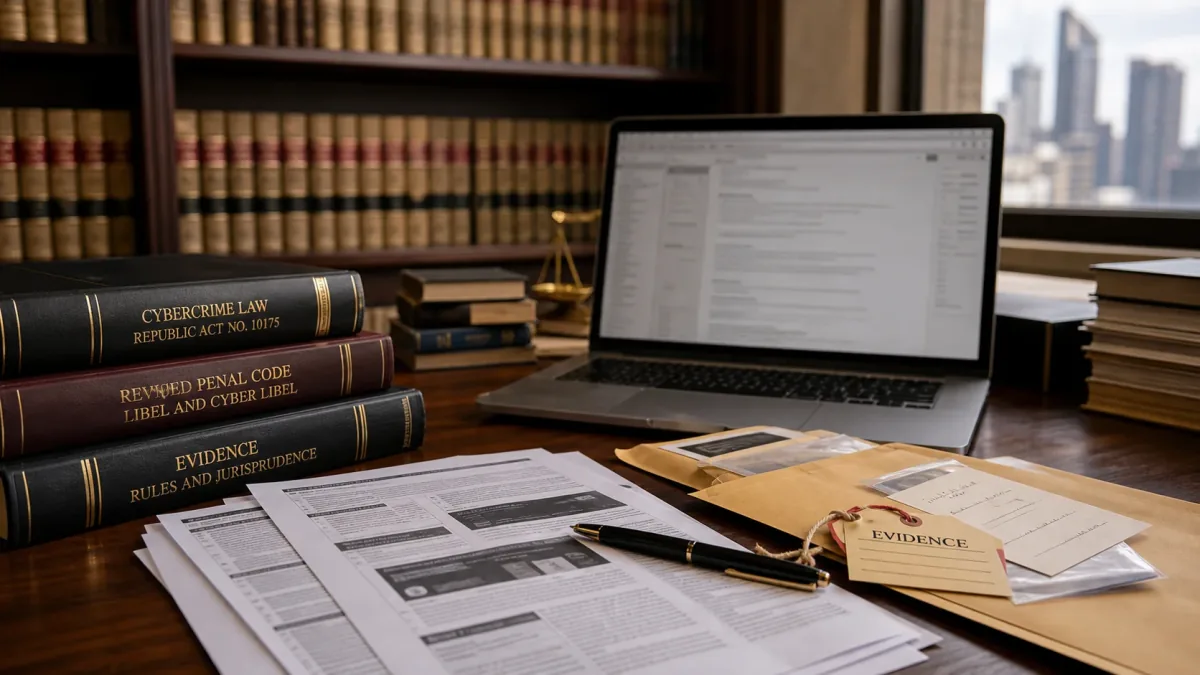
The Rules on Electronic Evidence make authentication and integrity central. A screenshot may help a manager decide what to do, but a lawyer needs more: who captured it, when, with what device, from what account state, from what URL and where the original file is stored. If litigation is realistic, counsel may add notarised captures, hash logs, forensic preservation or testimony from the person in charge of business records.
Business records must be preserved separately from platform records. Platform records include the review text, profile URL, date, screenshots, profile history and other public content. Business records include bookings, invoices, receipts, chat messages, email threads, call logs, incident reports, treatment records, service reports, delivery notes or project files. Keeping those two groups separate helps avoid accidentally sending confidential records to Google.
The strongest wording is neutral. Instead of writing 'the reviewer is a liar', use a record-based statement: 'No matching booking, invoice, payment, inquiry, treatment, delivery or incident record was found for the reviewer name, date, phone number, email pattern, service described or branch mentioned.' That language is easier for Google and counsel to evaluate.
If the case involves sensitive data, the evidence file needs redaction rules. Patient names, ID numbers, phone numbers, addresses, children's information, bank details and health facts should not appear in a public reply and should rarely be included in a standard platform report. A lawyer can prepare a confidential evidence annex for formal proceedings while giving Google a concise policy summary.
Google Policy Strategy
Google does not decide the full criminal or civil case. The platform report should stay focused on prohibited content, while counsel separately assesses defamation, privacy, cybercrime and civil remedies. Google's Maps user-generated content policy focuses on categories such as fake engagement, rating manipulation, conflict of interest, impersonation, misrepresentation, harassment, offensive content, personal information, off-topic content and repetitive content. A report that says only 'this is libel' often misses the way a moderator actually reviews the content.
Google's Business Profile review reporting guidance explains that businesses may report reviews for removal, but only reviews that violate Google policy are eligible. It also warns that Google does not remove a review simply because the business disagrees with it. That distinction should shape the submission: describe the policy breach, then attach or summarise the evidence supporting that category.
For fake engagement, the submission should show why the reviewer probably had no genuine experience or why the pattern suggests manipulation. For personal information, quote the private data and explain why it creates risk. For harassment, identify threats, doxxing, sexualized claims, targeted abuse or calls for others to attack the business. For off-topic or repetitive content, show why the text is not about an actual experience at that business.
If the first report is rejected, repeating the same form is usually weaker than improving the file. The second attempt should add exact sentences, clearer policy categories, a short chronology and non-confidential proof. The business should track case numbers, dates, emails from Google and changes in the review. That record matters if a legal removal request or formal proceeding later becomes necessary.
Where the issue is legal rather than only policy-based, Google's legal removals help expects precise URLs, the specific content at issue, the reason it violates local law and enough background for review. Google's misuse policy also warns against unfounded, repetitive, bad-faith or unverified legal notices. This is why a law-firm approach should be narrow, sourced and honest.
Legal Notice And Mise En Demeure Strategy
Criminal-law language in a demand letter must be disciplined. Threatening cyber libel in a normal warranty dispute can look disproportionate unless the facts show a false and reputationally serious allegation. A Philippine legal notice should be written as if it may later be read by a judge, Google, opposing counsel, a journalist or the reviewer. It should not contain every internal frustration. It should contain publication location, exact URL, exact passages, why the passages are false or unlawful, what evidence supports the position and what remedy is requested.
The notice can request removal, correction, a written undertaking not to repost, preservation of accounts and communications, and a response by a reasonable deadline. It can reserve civil, criminal, cybercrime and privacy remedies where appropriate. It should avoid inflated damages, unsupported accusations, threats to expose the reviewer publicly, or any offer of payment or benefit in exchange for changing a review.
The phrase mise en demeure is not a Philippine procedural magic word. It is useful operationally because it describes a formal demand that fixes the dispute, identifies the breach and gives the recipient a chance to cure. For Philippine matters, the legal effect depends on the facts, the applicable statute, the recipient, the remedy requested and the forum that may later review the dispute.
If the suspected author is unknown, counsel may first focus on Google reporting and evidence preservation. If the author is known, a notice may be realistic. If a supplier, former employee or competitor appears involved, the notice should include preservation language but should still avoid presenting suspicion as proved fact. If an urgent injunction or court order is needed, local counsel should assess venue, cause of action and evidentiary support.
Public Response Without Creating A Second Problem
A lawyer-led strategy separates the Google report, legal notice, public response and possible complaint into documents that tell the same factual story without overclaiming. A public response should be designed for future readers, not for a fight with the reviewer. It may say that the business takes the concern seriously, cannot verify the described facts in its records, and invites the reviewer to contact a private compliance or management channel. It should not reveal private customer data, medical details, settlement discussions or legal threats.
The reply must also remain consistent with the Google report and any notice. If the Google report says the reviewer was never a customer, the reply should not describe the customer's private file. If the notice alleges a false fraud accusation, the reply should not make a new accusation against the reviewer. Consistency is evidence discipline: it shows that the business is not improvising under pressure.
Some businesses want to publish a long rebuttal because silence feels like admission. That is understandable, but risky. A long reply can reveal confidential information, create new defamatory statements, disclose personal data, confirm damaging details or encourage more comments. A shorter reply, combined with a private evidence-led removal strategy, usually protects reputation better.
Practical Counsel Checklist
- Capture the full review, URL, author profile, date, rating, attached photos, business profile and owner replies before taking action.
- Create a sentence-by-sentence matrix separating fact, opinion, insult, privacy issue, harassment, fake engagement and off-topic content.
- Search bookings, invoices, payment records, CRM, chat logs, treatment files, delivery records or project files before alleging falsity.
- Record discovery date and capture method because prescription and procedural timing may matter in cyber-libel analysis.
- Use non-confidential proof for Google and keep sensitive records for counsel, court or authorised legal processes.
- Choose one route at a time: Google report, public response, legal notice, negotiation, privacy complaint assessment or litigation review.
- Keep the public response short, privacy-safe and consistent with the platform report and legal notice.
- Do not offer incentives for review removal or revision, and do not submit repetitive legal webforms without new evidence.
References For A Philippines Review-Defamation File
- Revised Penal Code, Articles 353 to 362: libel, malice, publication means, threatening publication and related rules.
- Republic Act No. 10175, Cybercrime Prevention Act: cyber libel through a computer system, related cyber offenses and the higher-penalty rule.
- Republic Act No. 10173, Data Privacy Act: privacy, sensitive personal information, proportional processing and National Privacy Commission functions.
- Rules on Electronic Evidence, A.M. No. 01-7-01-SC: authentication, integrity and reliability of electronic records.
- Disini v. Secretary of Justice, G.R. No. 203335: constitutional treatment of cyber libel and limits around online speech.
- Causing v. People, G.R. No. 258524: one-year prescription analysis for cyber libel and discovery-based timing.
- People v. Soliman, G.R. No. 256700: online libel, penalty analysis and the need to read Article 355 with RA 10175.
- Penalosa v. Ocampo, G.R. No. 230299: caution on pre-RA 10175 Facebook posts, procedure and strict construction in criminal cases.
- Google Maps prohibited and restricted content policy: fake engagement, conflict of interest, harassment, personal information, off-topic and repetitive content.
- Google Business Profile review reporting guidance: only policy-violating reviews are eligible for removal through standard flagging.
- Google legal removals help: legal-removal requests need precise URLs, specific content and a local-law explanation.
- Google legal reporting misuse policy: repeated unfounded notices, bad-faith submissions and unverified bulk requests can be flagged.
The practical conclusion is that a Philippine Google review dispute is strongest when it is treated like a legal evidence file from the first hour. Preserve the digital record, classify the words, test the business records, choose the Google policy category, draft any notice proportionately and keep the public response disciplined. That approach gives the client the best chance of removal, correction, deterrence or calm reputation repair without turning one review into a larger dispute.