
A practical Philippines guide to Google reviews alleging hidden fees, overcharging, bait pricing or misleading quotes, with evidence, public-response and platform-removal strategy.
A pricing complaint on Google is not automatically a fake review and not automatically removable. Some reviews describe a real dispute about deposits, cancellation terms, taxes, service charges, surge pricing, optional extras or misunderstood quotes. Others misstate the transaction, invent hidden fees that never existed, or use exaggerated pricing allegations to pressure the business. In Philippines, the first legal task is therefore classification, not outrage.
A disciplined file separates three questions from the start. First, what do the price records actually show: published tariffs, quote versions, invoice lines, taxes, service charges, discounts, timestamped messages and terms accepted by the customer. Second, which Google angle is genuinely available: fake engagement, no real customer record, wrong business, doctored screenshots, misleading context or another policy route supported by facts. Third, can the wider transparency issue also be explained under Philippines Consumer Act (Republic Act No. 7394). That consumer-law context does not guarantee removal, but it helps explain why inaccurate price allegations can distort market choice.
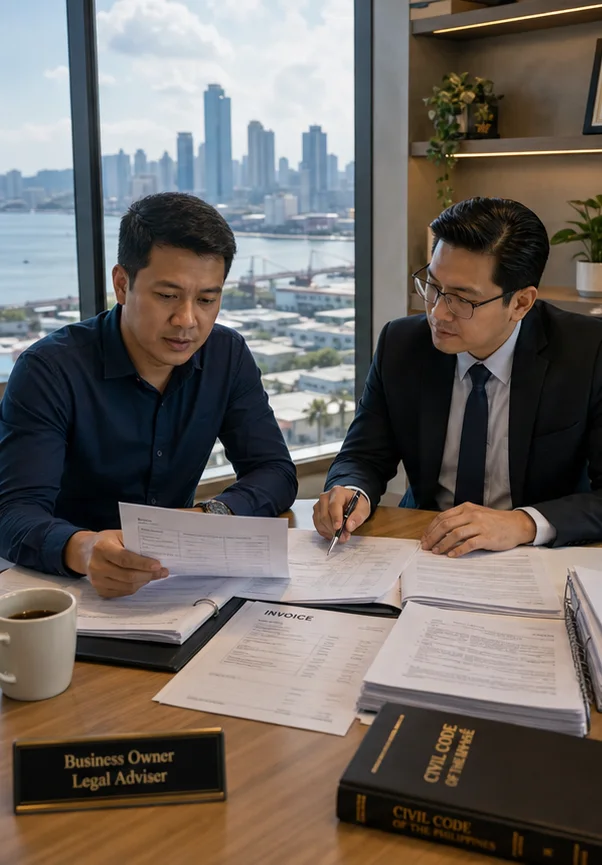
Evidence Checklist Before You Call It Fake
The evidence set should preserve the full review URL, reviewer profile, star rating, exact wording, images, timestamps, visible edits and every owner-reply draft. It should also preserve the pricing record itself: price lists, menu pages, booking confirmations, quote revisions, contract terms, invoices, card slips, receipts, cancellation clauses, refund logs and any public promotion that could have caused confusion. If the review depends on translation, keep both the original text and a careful working translation.
The practical aim is to test accuracy, not to draft a defensive speech. The file should identify whether the complaint concerns a real customer, a mixed dispute, a wrong branch, an omitted term, an optional add-on, a tax misunderstanding, or a fabricated allegation of overcharging. Businesses should avoid publishing raw billing records, customer identities or internal notes in the public thread simply to prove the reviewer wrong. The strongest files are chronological, redacted where needed and usable both for Google reporting and for local counsel review.
Google Policy And The Consumer-Law Angle
Google will not remove a review only because the business disagrees with the customer's view of price or value. A strong platform submission must stay narrow and factual. If there is no real transaction, the review may fit fake engagement or misleading content. If screenshots or invoices are doctored, the file should say so and preserve the original records separately. If the review is genuine but incomplete, a careful public response may be more realistic than an aggressive removal demand.
In parallel, the business can assess the pricing-transparency context under Philippines Consumer Act (Republic Act No. 7394). Hidden-fee allegations, drip-pricing accusations and bait-style complaints can affect more than reputation because they influence consumer trust and purchase decisions. That does not mean every hostile review becomes a regulator case, nor that the business should threaten legal action immediately. It means the company should align its Google strategy, internal records and any external notice with the same disciplined account of what the customer saw, accepted and paid.

Public Response Strategy Without Overreaching
A public response should usually be short, calm and reversible. In many files, the safest wording is that the business is reviewing the pricing concern against the booking or billing record and invites the reviewer to an official private channel. The reply should normally avoid posting invoice numbers, payment references, personal data or detailed contract extracts in public. It should also avoid categorical language such as scam accusation, extortion or dishonest customer unless the proof is unusually strong.
This restraint matters because pricing disputes often turn on sequence and context. A review may omit the quote revision, ignore an accepted term or collapse several charges into one allegation of fraud. The public answer should therefore support the evidentiary record, not try to litigate the whole file in front of future customers. The business also should not answer a harsh pricing review by manipulating its own review environment, pressuring for deletion or posting offsetting praise through staff or associates.
When Escalation Becomes More Serious
Escalation deserves closer review when the review alleges fraud or criminal conduct, triggers repeated refund demands, appears across multiple profiles, includes doctored pricing screenshots, targets named staff, or forms part of a coordinated reputational attack. In those situations the business may need a combined strategy involving evidence preservation, Google appeal, a measured notice, payment-record review, and local advice on defamation, consumer law or unfair-practice exposure.
The caution remains the same across jurisdictions: do not promise removal, regulator action, prosecution or court success. A customer pricing dispute may stay public even when the business strongly disagrees with it. The more defensible goal is narrower: preserve the record early, classify the allegation accurately, keep the public response proportionate and escalate only when the facts support the next step.
Related PimLegal Reading
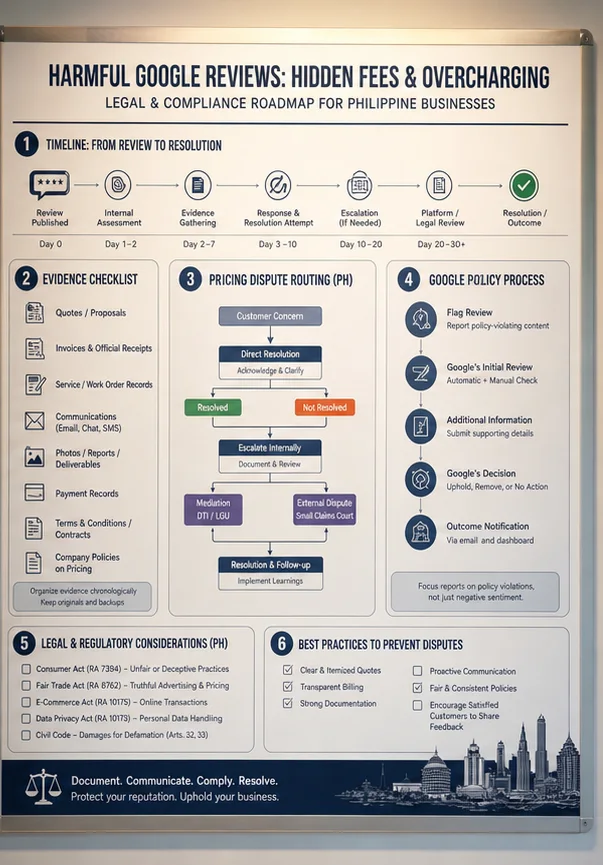
For related reading, see our local article on responding to harmful Google reviews and the Philippines Google review removal page. These two internal links connect fake-review proof with the wider removal and escalation strategy in Philippines.
Selected Official References
- Philippines Consumer Act (Republic Act No. 7394)
- Google prohibited and restricted content policy
- Google Business Profile review reporting guidance
- Google legal content removal guidance
Practical Conclusion
The strongest strategy for a hidden-fee or overcharging review is to separate a real service dispute from a false or distorted pricing allegation. Preserve the pricing record, map the case to the narrowest honest Google category, and keep the public response shorter than the evidence file.
This article is general information only and not legal advice for a specific dispute in Philippines. Businesses should seek local advice before sending formal notices, disclosing billing records or assuming that any review will be removed.