
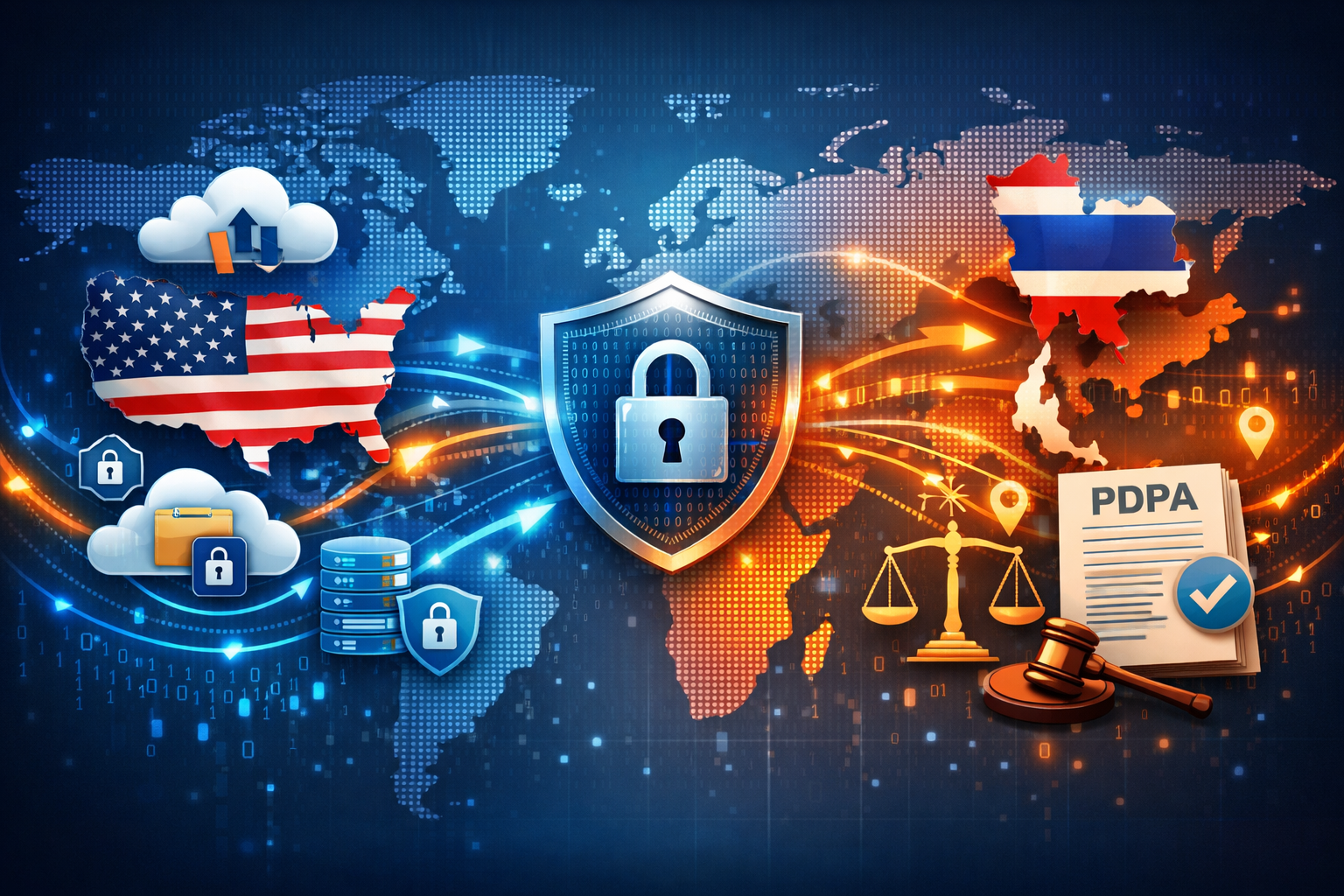
A cross-border data transfer occurs whenever personal or sensitive information is sent from one country to another. For businesses in Thailand, this is common when using cloud services, international partners, or global platforms.
While convenient, transferring data internationally comes with legal obligations to ensure the information remains protected and the transfer is lawful under Thailand’s PDPA and other regulations.
Legal Framework in Thailand
Thailand’s Personal Data Protection Act (PDPA) governs the transfer of personal data outside the country. Key principles include:
- Adequate Protection: The receiving country or organization must provide protections equivalent to PDPA requirements.
- Contractual Safeguards: Data transfer agreements or clauses must clearly define responsibilities and security measures.
- Consent: Individuals may need to provide explicit consent if their personal data is transferred internationally.
- Accountability: The data controller remains responsible for ensuring the transfer meets PDPA standards.
These rules ensure personal data is safeguarded even when it leaves Thailand, reducing the risk of breaches or unauthorized use.
What Makes a Transfer ‘Legal’?
To ensure a cross-border transfer is legal, businesses must satisfy several conditions:
1. Adequate Level of Data Protection
The destination country must have data protection standards comparable to Thailand’s PDPA. If not, additional contractual or technical safeguards are required.
2. Explicit Consent When Required
If personal data is sensitive or the recipient is outside a country with adequate protections, obtaining informed consent from the data subject may be mandatory.
3. Written Data Transfer Agreements
Contracts with foreign recipients should clearly specify:
- Purpose of data processing
- Security measures and confidentiality obligations
- Responsibilities for breach notification
4. Documentation and Record-Keeping
Maintaining clear records of cross-border transfers demonstrates compliance and helps in case of audits or regulatory inquiries.
5. Security Measures
Employ encryption, access controls, and secure channels to prevent unauthorized access during the transfer.
Common Scenarios in Cross-Border Transfers
- Cloud storage providers: Storing customer data on servers abroad.
- Payment gateways: Sharing personal and financial data with foreign processors.
- International clients or partners: Exchanging employee or customer information.
- Marketing platforms: Transferring personal data for email campaigns or analytics.
In all cases, businesses must ensure PDPA compliance and contractual safeguards.
Risks of Non-Compliance
Failing to comply with cross-border data transfer rules can result in:
- Administrative fines under PDPA
- Legal liability for data breaches or misuse
- Reputational damage with clients and partners
- Operational disruption if regulators order suspension of transfers
Even accidental non-compliance can have serious financial and operational consequences.
Practical Steps for Legal Transfers
- Conduct a transfer impact assessment to identify risks and requirements.
- Verify the recipient’s data protection standards and legal environment.
- Draft a clear data transfer agreement including security, confidentiality, and breach notification.
- Obtain consent from data subjects when required.
- Implement technical safeguards such as encryption and access controls.
- Maintain detailed records for all cross-border transfers.
- Regularly review policies to stay aligned with PDPA updates and global best practices.
Following these steps helps businesses maintain legal compliance and protect customer trust.
The Takeaway
Cross-border data transfers in Thailand are legal only when adequate protection, contractual safeguards, consent, and security measures are in place. Compliance with PDPA and proper documentation are essential for businesses operating internationally.
By implementing best practices, businesses can confidently transfer data across borders, maintain regulatory compliance, and safeguard sensitive information, ensuring both operational efficiency and trust with customers.