
Many businesses, especially startups, rely on template contracts to save time and cost. While convenient, these standardized documents often fail to account for specific business needs, regulatory requirements, or unique risks.
Custom contracts, on the other hand, are tailored to your operations, stakeholders, and legal environment, ensuring stronger protection and reducing the likelihood of disputes.
Limitations of Template Contracts
Template contracts have obvious advantages—they are inexpensive, quick, and readily available. However, relying solely on templates poses several risks:
- Generic language: May not address your specific business operations
- Missing clauses: Templates often omit industry-specific protections
- Outdated legal references: Templates may not reflect the latest Thai laws and regulations
- Dispute vulnerability: Courts may find ambiguous template language unenforceable
Templates are best used as starting points, not final agreements.
The Legal Benefits of Custom Contracts
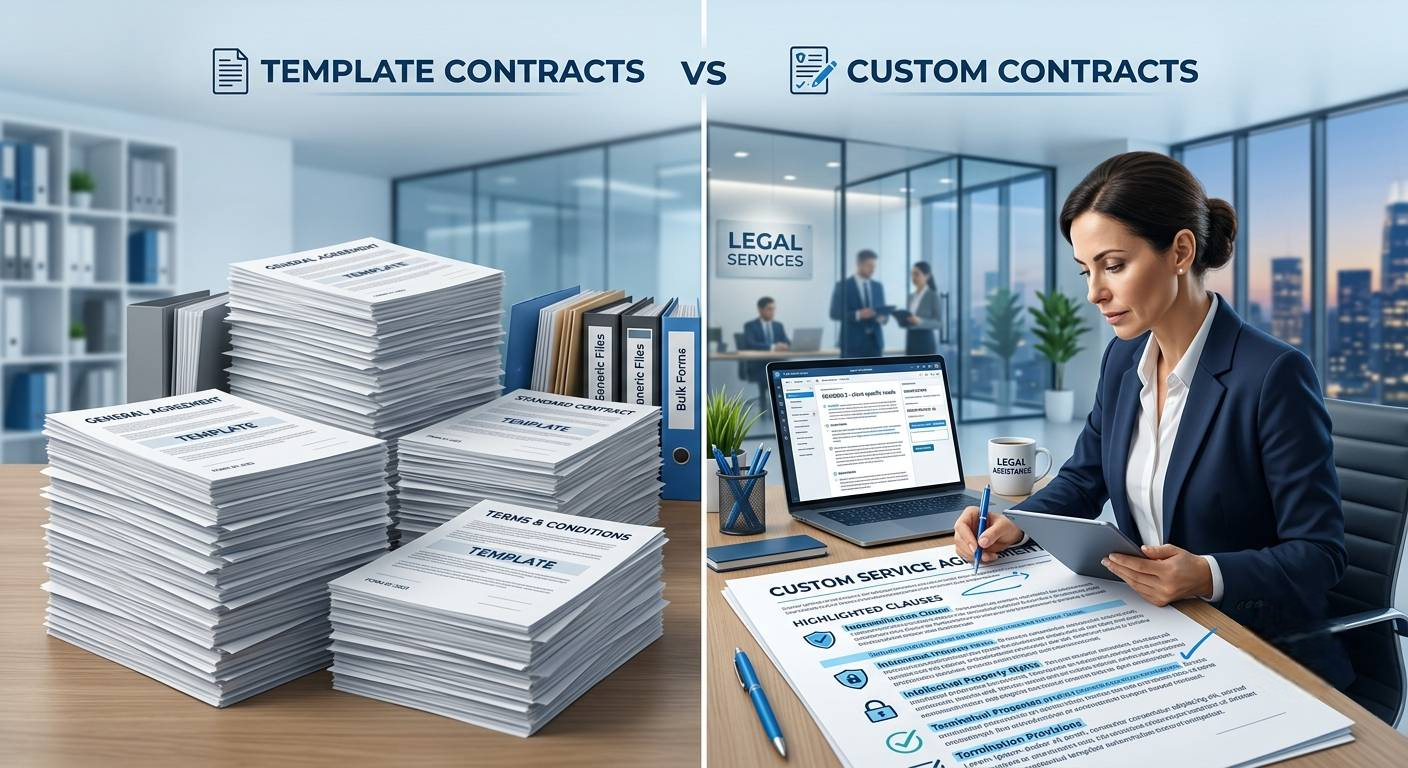
Custom contracts provide precision, clarity, and enforceability:
- Tailored clauses: Address business-specific needs, such as IP ownership, data protection, and liability limits
- Regulatory compliance: Reflect current Thai laws, including labor, consumer protection, and e-commerce regulations
- Dispute mitigation: Clear, detailed terms reduce ambiguity and potential conflicts
- Adaptability: Flexible enough to incorporate changes in business strategy or technology
Custom contracts act as legal armor, reducing risks in both routine and high-stakes transactions.
Protecting Intellectual Property
Template contracts often include broad or vague IP clauses. For businesses leveraging digital content, AI tools, or proprietary software, IP ownership must be clearly defined:
- Specify rights over creations by employees, contractors, or AI-assisted work
- Include licensing terms and permitted uses
- Ensure trademarks, copyrights, and patents are properly addressed
Custom clauses prevent unintended IP loss or disputes, which is crucial in Thailand’s growing tech and creative sectors.
Limiting Liability and Risk Exposure
A generic contract may not sufficiently limit liability for errors, service failures, or breaches. Custom contracts allow you to:
- Set caps on damages or indemnification
- Clearly define warranties and disclaimers
- Specify dispute resolution methods (mediation, arbitration, courts)
Properly drafted liability clauses protect your business from unexpected financial and legal exposure.
Addressing Employment and Service Specifics
For employment, consulting, or service agreements, custom contracts ensure:
- Compliance with Thai labor law
- Clear notice and termination provisions
- Confidentiality, non-compete, and non-solicitation tailored to the role or service
Tailored agreements reduce labor disputes and reinforce operational clarity.
Negotiation and Relationship Management
Custom contracts also strengthen business relationships:
- Demonstrates professionalism and attention to detail
- Sets clear expectations for both parties
- Reduces misunderstandings over scope, deliverables, or payment terms
A well-drafted contract facilitates trust and collaboration while protecting legal interests.
When Templates Are Useful

Templates are not inherently bad. They are useful when:
- Conducting low-risk, repetitive transactions
- Acting as a starting draft for more detailed agreements
- Supporting small or preliminary arrangements before full custom contracts are developed
Even in these cases, review by a legal professional ensures they are adapted to Thai law and your business context.
Conclusion: Tailoring Contracts Is a Legal Imperative
While templates save time, custom contracts provide legal security, clarity, and enforceability. Tailored agreements help businesses:
- Protect intellectual property
- Limit liability
- Ensure regulatory compliance
- Reduce disputes
- Strengthen business relationships
For any serious business transaction in Thailand, relying solely on generic templates can leave gaps and vulnerabilities. Investing in custom contracts ensures your agreements reflect your operations, protect your interests, and comply with current law—making them an indispensable tool for legal and operational success.