
Board resolutions remain a critical governance tool for private companies in Thailand. They formalize key decisions, from approving contracts to authorizing capital expenditures, and are often required for regulatory filings and legal enforcement.
Even in the digital age, format and language matter, as ambiguous or poorly drafted resolutions can create legal disputes, compliance issues, and operational inefficiencies.
Legal Basis for Board Resolutions
Under the Thai Civil and Commercial Code and the Public Limited Company Act (for larger companies), board resolutions serve as official records of directors’ decisions.
Key points include:
- Resolutions are legally binding when properly documented
- Required for major corporate actions, including loans, share issuance, and mergers
- May be used as evidence in legal disputes or regulatory inspections
Clear documentation ensures that resolutions are recognized and enforceable.
Format Matters: Structure and Clarity
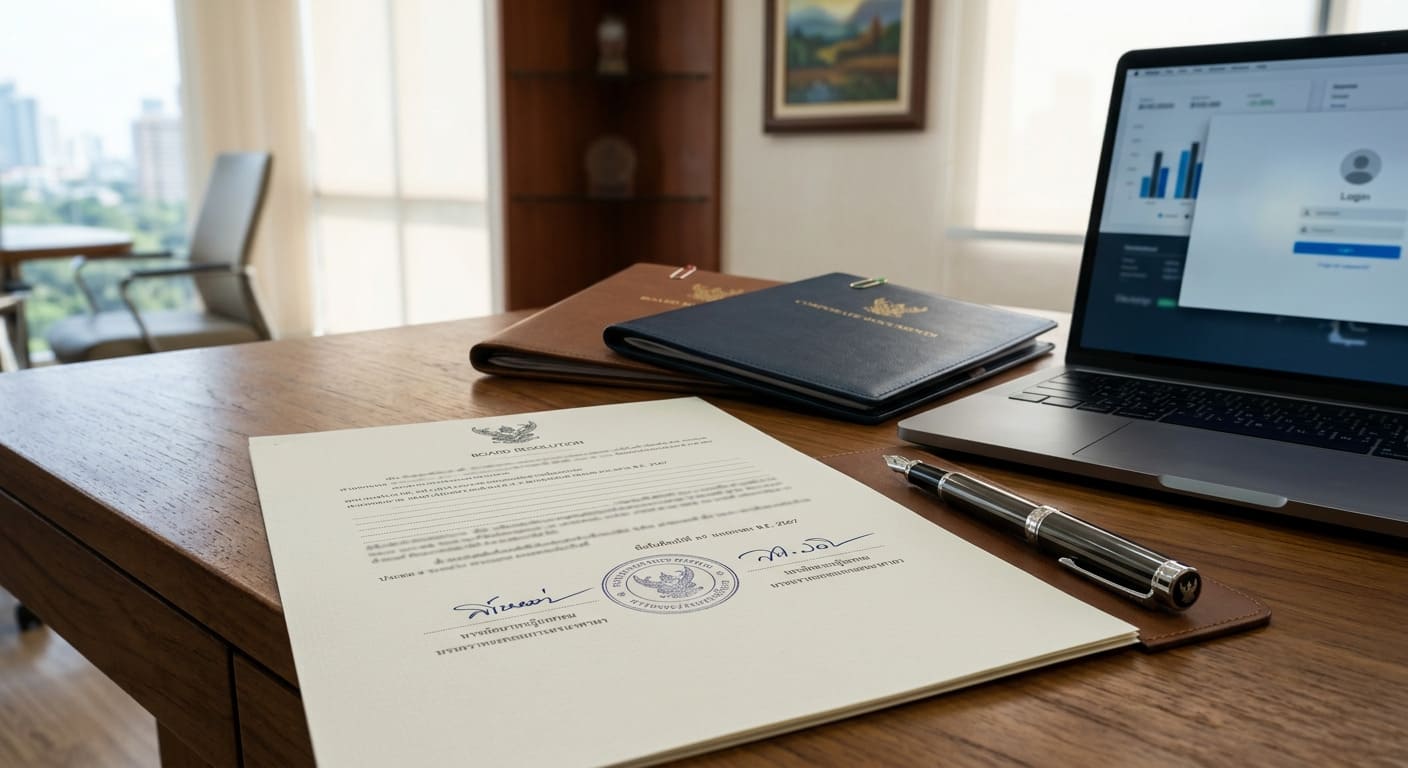
A well-formatted resolution enhances readability and enforceability. Essentials include:
- Heading: Clearly indicate it is a “Board Resolution” with the company name
- Date and venue: Specify when and where the resolution was passed
- Attendees: List directors present and any proxies
- Decision language: Use precise, unambiguous terms
- Authorization clause: State which officers are empowered to act
Structured formatting reduces misinterpretation and legal challenges.
Language Matters: Precision and Ambiguity
Ambiguous wording can create legal risk. Best practices include:
- Use clear, concise, and formal language
- Avoid colloquialisms or vague instructions
- Specify exact authority granted, e.g., “The Managing Director is authorized to execute the contract dated 15 November 2025”
- Define terms if multiple interpretations are possible
Precision ensures the resolution is actionable and enforceable under Thai law.
Compliance with Corporate Governance Requirements
Properly drafted resolutions demonstrate good corporate governance:
- Evidence of board oversight and approval
- Supports accountability and transparency for shareholders
- Required for filings with the Department of Business Development (DBD) or other authorities
- Protects directors from personal liability by showing due diligence
Following governance standards strengthens corporate credibility.
Common Pitfalls to Avoid
Thai private companies often face issues from:
- Handwritten or informal resolutions that lack legal weight
- Incomplete attendance or voting records
- Unclear delegation of authority leading to disputes
- Failure to sign or date resolutions
- Inconsistent references to laws, contracts, or corporate documents
Avoiding these pitfalls reduces regulatory and legal risk.
Digital Resolutions and E-Signatures

Electronic board resolutions are increasingly used but require careful attention:
- Ensure digital signatures comply with Thailand’s Electronic Transactions Act
- Maintain audit trails and secure storage
- Confirm that electronic documents are accepted by regulators and banks
Digital adoption does not eliminate the need for clarity and proper formatting.
Practical Tips for Effective Resolutions
- Use templates approved by legal counsel
- Record attendance and voting results clearly
- Use formal, precise language
- Include authority and follow-up action steps
- Keep digital and physical copies securely stored
These practices enhance enforceability, transparency, and corporate compliance.
Don’t Underestimate the Power of Words
Board resolutions are more than administrative formalities—they are legally binding documents that reflect company decisions and corporate governance standards.
For Thai private companies, format and language matter: clarity, precision, and proper documentation protect the company, support regulatory compliance, and reduce the risk of disputes.
By prioritizing well-structured, legally sound resolutions, directors ensure that their decisions are enforceable, transparent, and aligned with good governance practices, safeguarding both the company and its leadership.