
As Thailand expands its role in global trade, businesses face increasing responsibility to comply with export control laws. Whether shipping electronics, food products, chemicals, or dual-use items, companies must navigate a framework of Thai regulations, customs requirements, and international trade rules.
Failure to comply can lead to fines, shipment delays, license revocations, and reputational damage. This makes export compliance a strategic necessity for Thai businesses operating across borders.
This guide breaks down the essentials of Thailand’s export control landscape and the internal processes companies should adopt to ensure efficient, lawful, and risk-free cross-border operations.
Understanding Thailand’s Export Control Framework
Thailand regulates exports through a combination of national legislation, ministerial notifications, and industry-specific standards. The primary goals are to:
- Protect national security
- Prevent illegal exports
- Ensure product safety
- Comply with international obligations
- Strengthen Thailand’s position in global trade
Businesses should understand that export compliance in Thailand is both sector-specific and document-driven, requiring accurate classification, permits, and coordination across agencies.
Key Authorities Involved in Export Control
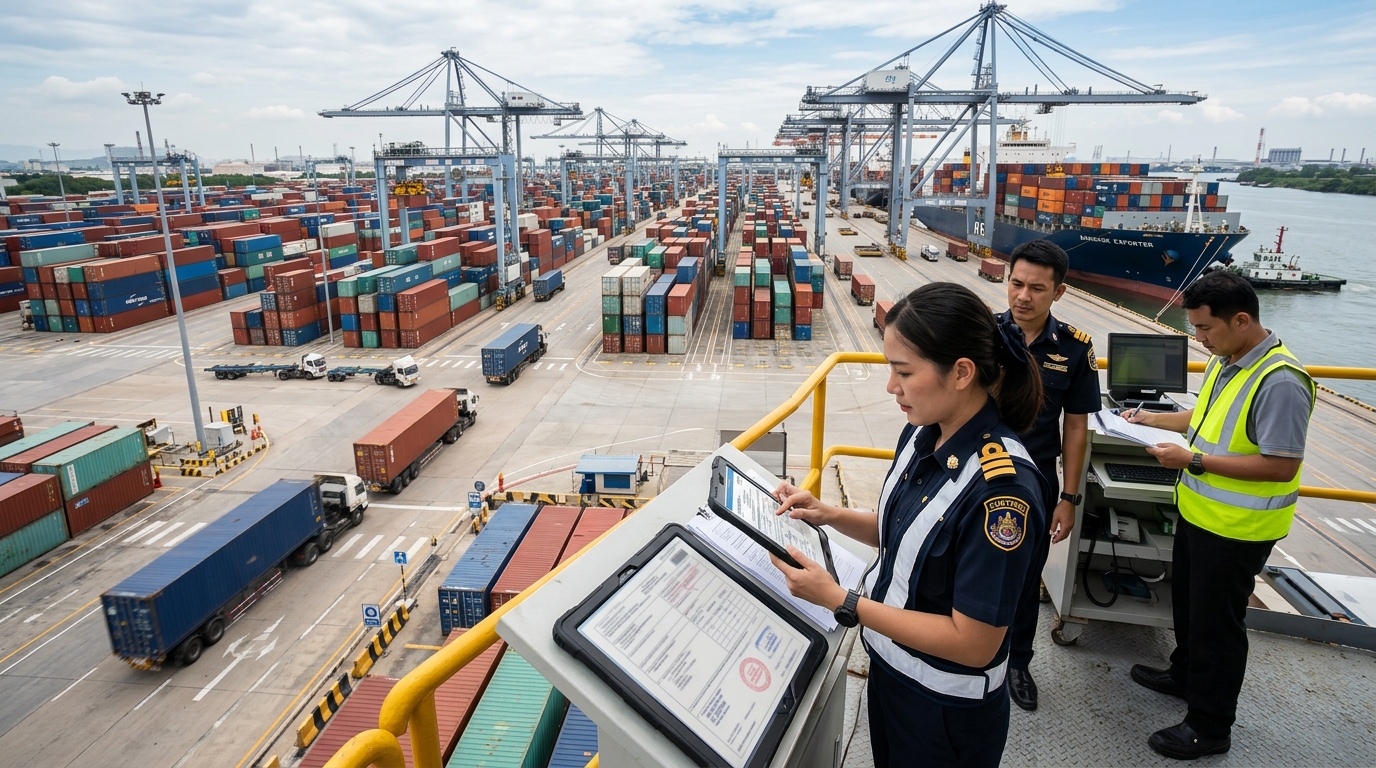
Several Thai government bodies play roles in regulating and monitoring export activities:
- Thai Customs Department – Oversees export clearance, declarations, and inspections
- Ministry of Commerce (MOC) – Issues export permits and controls restricted products
- Department of Foreign Trade (DFT) – Administers export licensing and trade restrictions
- Ministry of Industry – Regulates chemicals, industrial equipment, and hazardous materials
- Food and Drug Administration (FDA Thailand) – Oversees food, cosmetics, and medical product exports
- Board of Investment (BOI) – Provides incentives but requires strict compliance in return
Understanding which authority governs your product category is essential for planning and documentation.
Controlled and Restricted Export Items in Thailand
Not all goods can be freely exported. Thailand restricts certain items to comply with security, safety, and international agreements. Common controlled categories include:
- Dual-use goods (DUGs) that can serve civilian and military purposes
- Chemicals and hazardous substances
- Weapons, ammunition, and military equipment
- Cultural artifacts and antiques
- Food, agricultural goods, and livestock
- Medical devices and pharmaceuticals
- Electronics and high-technology equipment
Dual-use items often require special permits because they fall under international non-proliferation obligations, where Thailand aligns with global standards.
Export Licensing Requirements
If your goods fall under a restricted category, you must apply for an export license through the appropriate authority, often the Department of Foreign Trade. Licensing requirements typically include:
- Product classification by HS code
- Exporter registration
- End-user statements or certificates
- Technical descriptions of the item
- Country-of-destination details
- Intended usage verification
Licenses may take time to process, so businesses should integrate advance planning into their logistics workflows.
Documentation Required for Export Clearance
Even goods that are not controlled must comply with Thai Customs procedures. Common export documents include:
- Commercial Invoice
- Packing List
- Bill of Lading / Air Waybill
- Export Declaration (ED)
- Certificate of Origin (if required)
- Relevant permits or licenses
- Insurance documentation
Incorrect or incomplete paperwork is one of the leading causes of customs delays in Thailand.
Compliance Challenges for Thai Exporters
Businesses often face hurdles when navigating export regulations, such as:
- Misclassification of goods
- Missing licensing requirements
- Unclear documentation
- Confusion over agency responsibilities
- Rapid regulatory updates
- Limited staff training in export compliance
These challenges can cause shipment delays, penalties, or the suspension of export privileges.
How Thai Businesses Can Strengthen Export Compliance

Implement Internal Export Control Policies
A formal internal policy helps staff understand:
- How to classify goods
- Which products require permits
- Documentation processes
- Record-keeping standards
- Compliance roles and responsibilities
Policies should be updated regularly to reflect new regulations.
Conduct Product Classification and Risk Assessments
Accurate HS code classification is the foundation of export compliance.
Businesses should:
- Review product descriptions
- Identify whether items fall under controlled lists
- Assess destination-country restrictions
- Evaluate potential dual-use risks
This reduces misclassification errors and unnecessary delays.
Train Employees on Export Requirements
Training should cover:
- Thai export laws
- Customs procedures
- Controlled items
- License application steps
- Document accuracy
- Compliance reporting
Regular training reduces operational risks.Establish Coordination with Customs Brokers
Working with experienced customs brokers or freight forwarders helps ensure:
- Proper documentation
- Correct declarations
- Anticipation of possible compliance issues
- Smooth cross-border shipments
Brokers are especially valuable for businesses handling complex or high-risk goods.
Maintain Strong Record-Keeping Systems
Thai authorities often require historical export records.
Businesses should keep:
- Licensing documents
- Invoices and declarations
- Communication with authorities
- Shipping records
- Compliance reports
Good record-keeping supports audits, investigations, and internal reviews.
Conclusion
As global trade becomes more interconnected, Thai businesses must prioritize export compliance. By understanding government regulations, properly classifying goods, managing documentation, and implementing internal control systems, companies can avoid penalties and maintain seamless cross-border operations.
Navigating Thai export control laws may seem complex, but with clear processes and compliance-focused practices, businesses can confidently expand into international markets while ensuring full regulatory adherence.