
A practical United Kingdom guide to fake Google reviews, consumer-protection context, Google fake-engagement reporting and proportionate reputation strategy.
A fake or commercially manipulated Google review does more than annoy a business. It can distort consumer choice, influence rankings and pricing, and create a false market signal around quality, safety or trust. In United Kingdom, that is why a good legal file does not treat every suspicious review only as defamation. It asks whether the publication also fits a consumer-protection, unfair-practice or market-integrity problem.
The practical discipline is to separate three questions from the start. First, is there evidence that the review does not reflect a genuine customer experience or hides a commercial connection. Second, which Google policy category is strongest: fake engagement, conflict of interest, impersonation, misleading content or another prohibited-content route. Third, can the wider market context also be explained with UK Digital Markets, Competition and Consumers Act 2024. That broader context does not guarantee removal, but it can make the file more coherent and credible.
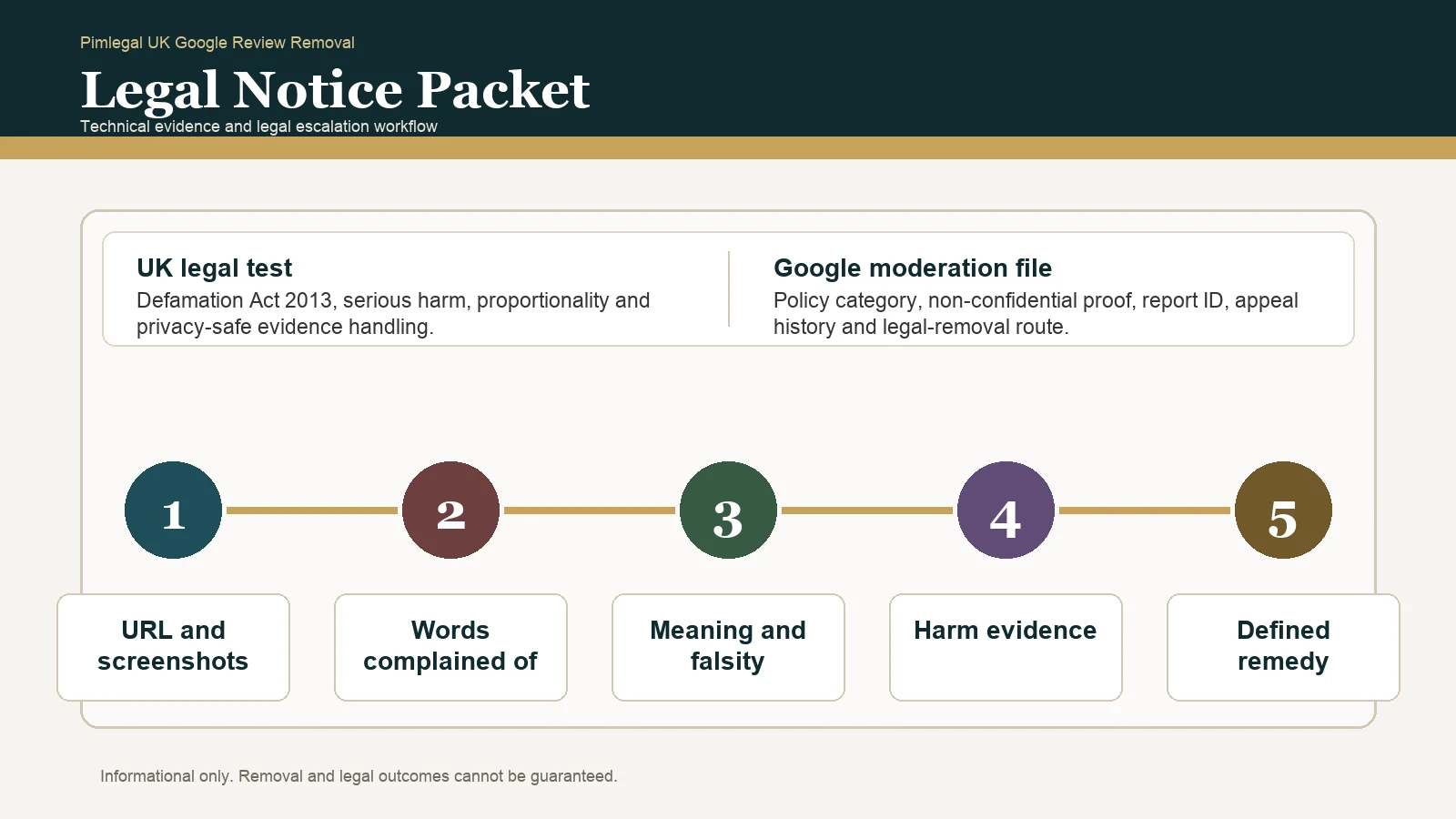
Evidence Checklist Before You Call It Fake
The file should preserve the full URL, reviewer profile, star rating, exact wording, images, timestamps, visible edits, owner replies and the position of the review on the business profile. Internal checks should record whether the reviewer matches bookings, invoices, support tickets, reservations, patient files, delivery logs or complaint records. A clear no-match result can matter, but only if the search method is documented carefully.
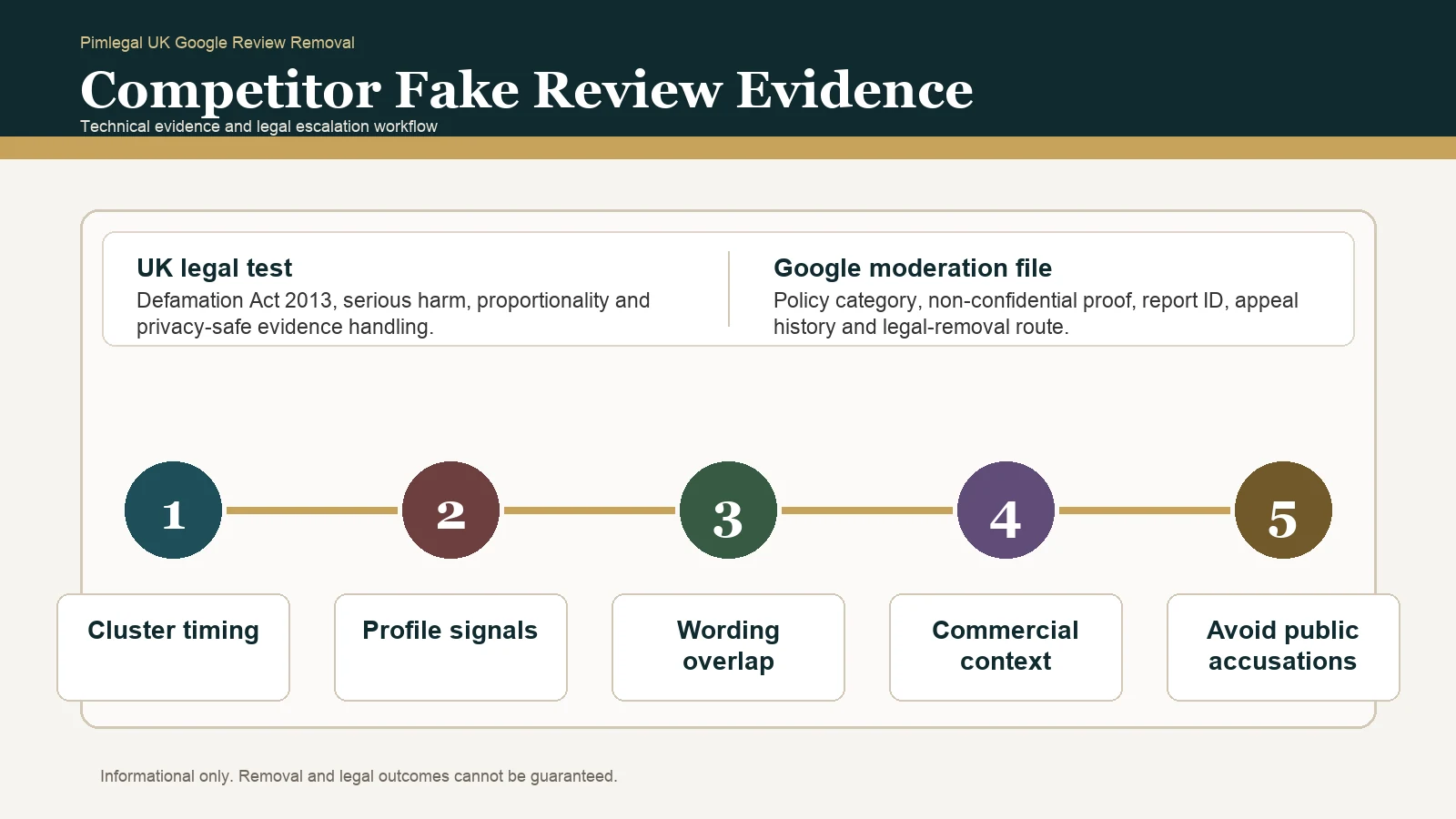
Pattern evidence is often as important as the customer check. Look for repeated wording, unusual timing, newly created profiles, undisclosed employee or agency links, competitor overlap, payment demands or coordinated review waves. Keep suspicion separate from proof. A business should not publicly accuse a competitor, former employee or broker unless the evidence really supports that allegation. Confidential records should stay inside the file, not inside the public reply.
Google Policy And The Consumer-Law Angle
Google moderators need a policy-framed explanation, not a long emotional complaint. A strong report uses the platform's own categories, quotes only the necessary wording, and explains why the review looks fabricated, commercially connected, misleading or part of fake engagement. Where the facts allow it, the report should be short, concrete and consistent with the internal evidence chronology.
In parallel, the business can assess whether the conduct also fits the local market-integrity context under UK Digital Markets, Competition and Consumers Act 2024. Bought reviews, incentivised testimonials, employee-written praise, undisclosed endorsements or competitor-linked attacks may affect more than reputation. They may also affect consumer trust and fair dealing. That does not mean regulator action or litigation is automatic. It means the business can explain why the conduct is not merely rude criticism.

Public Response Strategy Without Overreaching
A public response should usually stay short, neutral and reversible. In many cases it is safer to say that the business cannot verify the described experience from available records and invites the reviewer to a private channel. It is often riskier to publish a categorical accusation such as fake review, scam account or competitor attack before the file is complete. Public wording should support the Google report, not contradict it.
Businesses should also avoid answering suspected fake reviews with bad countermeasures of their own: buying positive reviews, encouraging staff or family to post, selectively suppressing real complaints, or threatening action that the file cannot support. Those steps can worsen Google-policy risk, consumer-law exposure and litigation posture at the same time.
When Escalation Becomes More Serious
Escalation deserves closer review when the pattern suggests paid review services, competitor involvement, agency coordination, employee-written testimonials, extortion demands, repeated publication after warnings, or false allegations of fraud, safety failures or criminal conduct. In those files, the business may need a combined strategy covering evidence preservation, Google appeals, internal compliance, a measured legal notice and local advice.
The key caution is not to promise outcomes. Consumer-protection context does not guarantee regulator action. Google policy does not guarantee removal. A legal notice does not guarantee correction. The practical goal is narrower and stronger: preserve a clean record, classify the conduct accurately and keep every step proportionate to the evidence.
Related PimLegal Reading
For related reading, see our local guide to fake customer review evidence and the United Kingdom Google review removal page. These two internal links connect fake-review proof with the wider removal and escalation strategy in United Kingdom.
Selected Official References
- UK Digital Markets, Competition and Consumers Act 2024
- Google prohibited and restricted content policy
- Google Business Profile review reporting guidance
Practical Conclusion
Fake-review disputes are strongest when reputation, Google policy and consumer-protection angles are kept distinct but consistent. Preserve the review first, test the no-customer or manipulation evidence carefully, report it in Google's language and avoid public overstatement.
This article is general information only and not legal advice for a specific dispute in United Kingdom. Businesses should seek local advice before sending formal notices or accusing any person or company of review manipulation.