
Artificial intelligence is transforming content creation, from written articles and graphics to music, videos, and software code. As AI tools become increasingly sophisticated, a key question arises: who owns the output?
In Thailand, intellectual property (IP) law primarily protects works created by humans. This creates a gray area for AI-generated content, raising important considerations for businesses, developers, and content creators who use AI in their workflows.
Thai Copyright Law Basics
Under Thai law, copyright is granted to original works of authorship created by humans, including:
- Literary works (books, articles, software code)
- Artistic works (images, graphics, paintings)
- Musical works and performances
Copyright protects the expression of ideas, not ideas themselves, and requires a human author.
Implication for AI: Content generated entirely by AI without meaningful human contribution may not be eligible for copyright protection under current law.
Human Involvement Matters
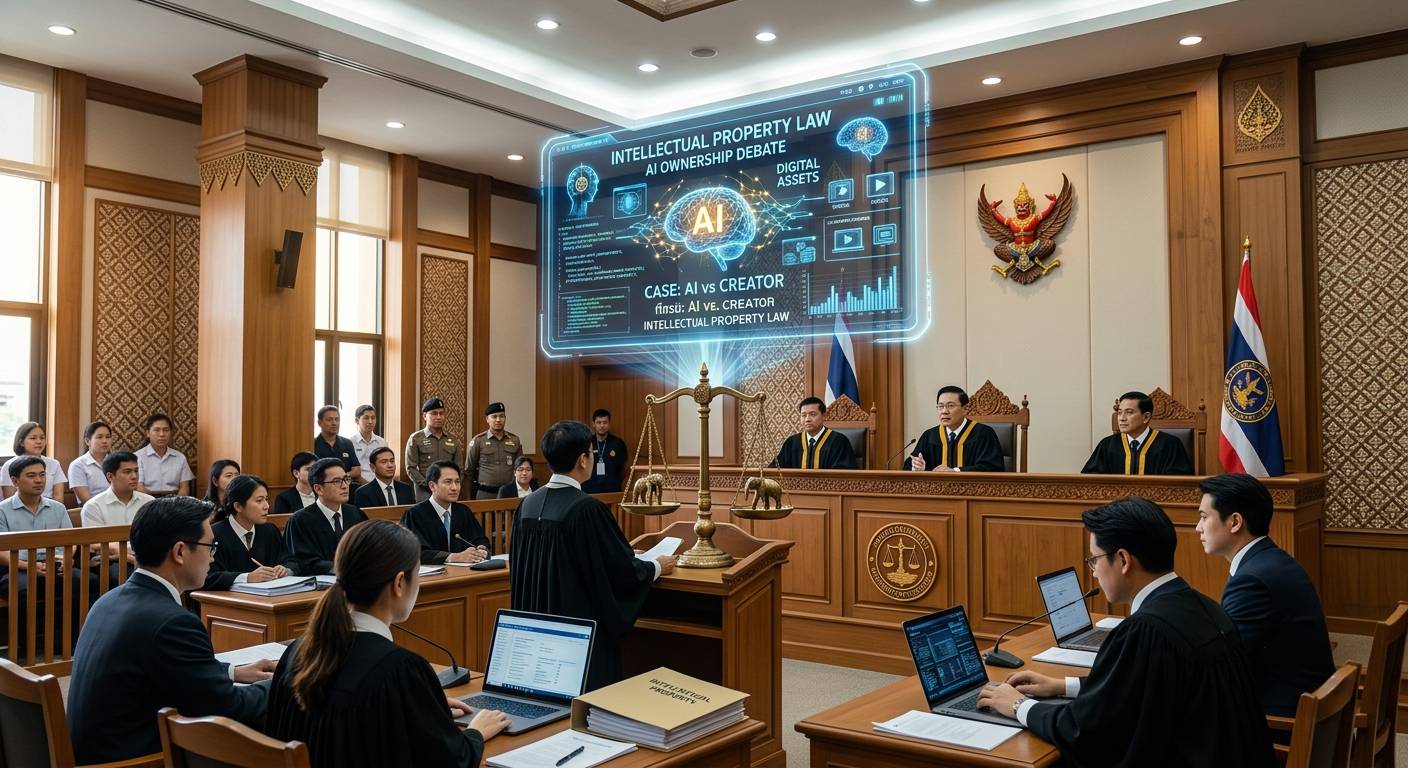
Ownership of AI-generated content in Thailand depends on the degree of human creative input. If a person guides the AI, selects outputs, or edits content meaningfully, they may claim copyright as the author or co-author.
- Input prompts alone may not suffice
- Selection, modification, and enhancement strengthen the human authorship claim
- Collaboration between human and AI can create a legally protectable work
Businesses using AI should ensure clear documentation of human involvement to support IP claims.
Employer and Work-for-Hire Considerations
Content generated by employees or contractors may fall under work-for-hire rules:
- Employers may own the copyright if the work is produced in the course of employment
- Contracts should explicitly address AI-assisted work
- Clear agreements prevent disputes over ownership
For startups or agencies using AI, contractual clarity is essential.
AI Developers vs. Users
Who holds IP rights when AI produces creative output?
- AI developers own the software but not necessarily the output created by users
- Users may claim rights if they exert creative control
- Licensing agreements between software providers and users often define ownership, usage, and commercial rights
Understanding these distinctions helps businesses avoid infringement or license violations.
Protecting AI-Generated Content
Even if copyright is uncertain, there are ways to protect AI-generated assets:
- Trade secrets: Keep AI outputs confidential
- Contracts and licensing: Specify ownership, permitted use, and revenue sharing
- Trademark and design registration: Protect branding, logos, or visual designs created by AI
These strategies provide legal protection without relying solely on copyright.
Future Legal Developments

Thailand, like many countries, is exploring how IP law should adapt to AI-generated works:
- Possible frameworks for granting rights to human-AI collaborations
- Guidelines on attribution and licensing for AI outputs
- Balancing innovation incentives with public access
Businesses should monitor legal updates to ensure compliance and capitalize on emerging opportunities.
Practical Tips for Businesses and Creators
- Document human involvement in AI content creation
- Review software licenses for AI tools to confirm commercial usage rights
- Use contracts to clarify ownership between employees, contractors, and collaborators
- Consider additional protections like trade secrets, trademarks, or design registrations
- Stay informed about evolving Thai IP law related to AI
These practices reduce risk and strengthen your claim over AI-assisted creative works.
Conclusion: Navigating the Gray Area
AI-generated content challenges traditional IP frameworks, particularly in Thailand where copyright requires human authorship. Ownership depends on human involvement, employment agreements, and licensing terms, and businesses must be proactive to protect their rights.
By carefully documenting human contribution, clarifying contracts, and leveraging alternative protections like trade secrets or trademarks, creators and businesses can safeguard AI-generated assets while complying with Thai law. As AI continues to evolve, staying informed and adopting best practices will ensure that your IP strategy remains both innovative and legally sound.