
A practical United Kingdom guide to preserving evidence, using Google personal-information rules, and avoiding privacy mistakes when a review names staff or reveals sensitive data.
When a Google review publishes a phone number, email address, home address, booking reference, medical fact, student detail, identity document, payroll detail or a named staff allegation, the dispute is no longer only about reputation. It becomes a combined privacy, evidence, platform-policy and communications issue. In United Kingdom, businesses should read the publication with the local privacy-law framework in mind before anyone replies publicly, uploads customer records to Google or forwards screenshots internally without controls.
That is why a lawyer-grade file separates three questions from the start. First, what exact data appears in the review and whose data is it. Second, what removal route best fits the facts: Google policy, a privacy complaint, a legal notice, a measured public response or a broader reputation strategy. Third, what information should stay out of public view even when the review is false. The discipline matters because a business can turn a bad review into a more serious privacy problem by repeating the data itself.
Why Personal-Data Reviews Need A Different Legal Reading
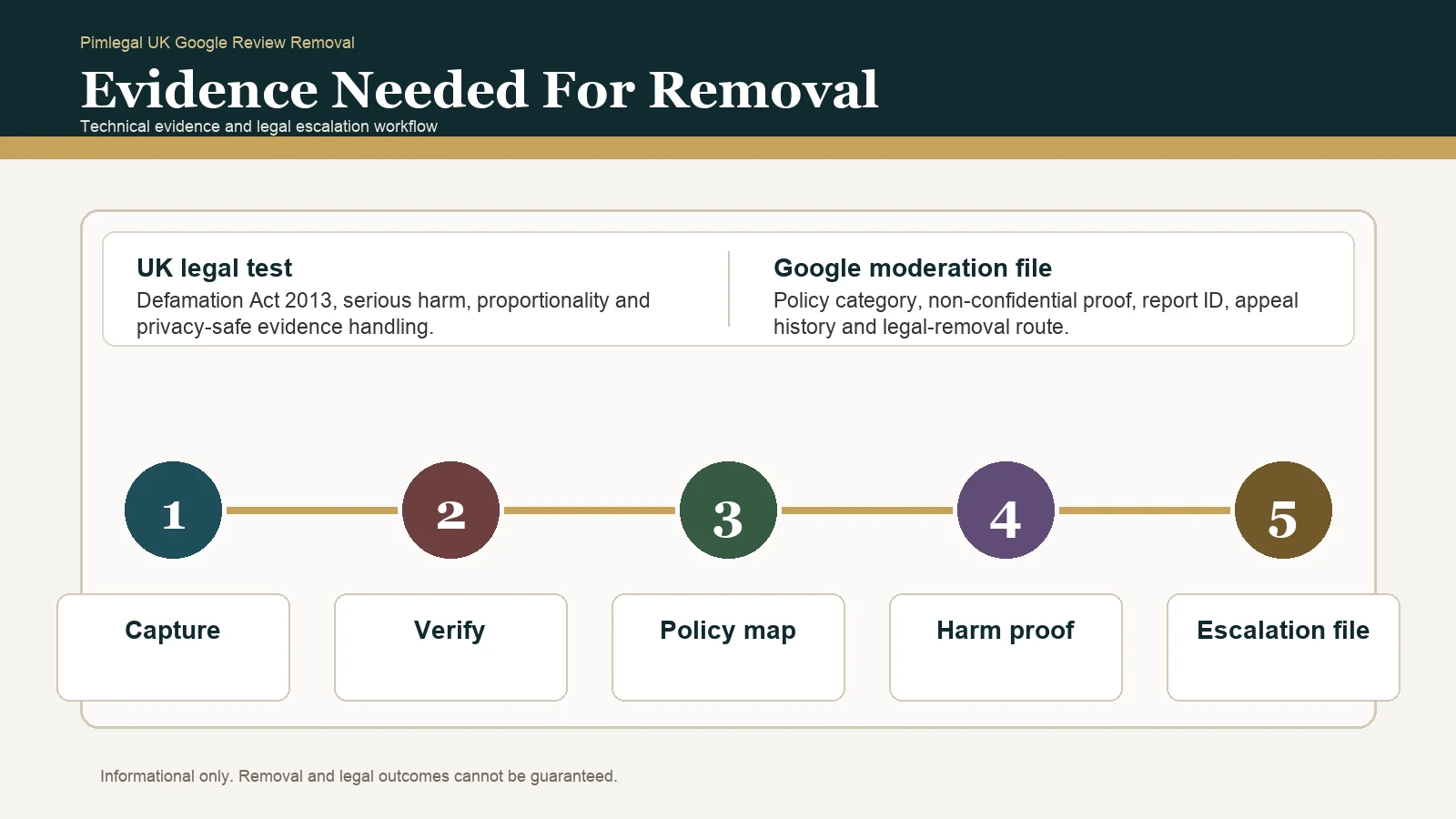
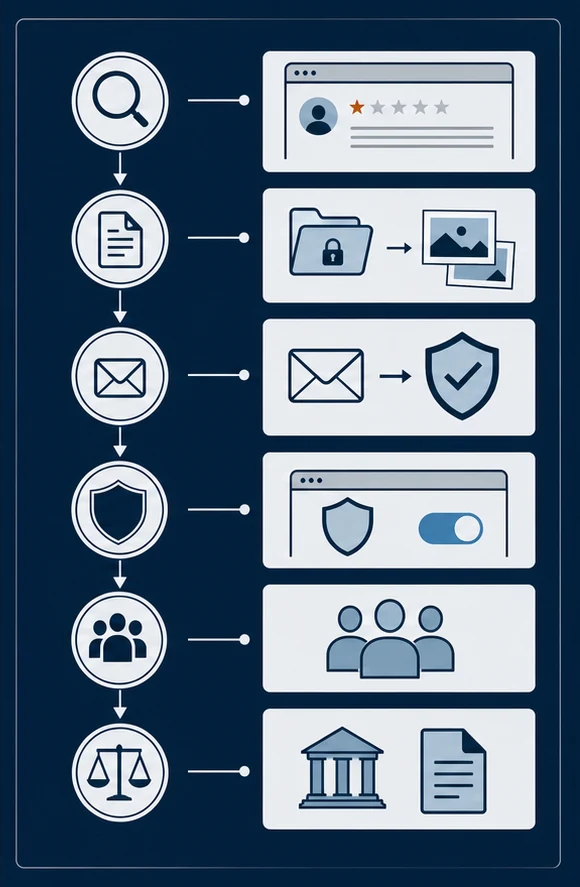
The first task is evidence preservation, not rebuttal. Capture the full review URL, profile link, star rating, text, images, publication date, visible edits, owner replies and surrounding business-profile context. Then isolate the personal-data element precisely: staff name, private phone number, email, order number, medical statement, customer history, child-related detail or any other identifying material. The file should also note whether the data belongs to a customer, employee, director, patient, student, guest or unrelated third party.
A privacy-safe evidence file keeps originals separate from working copies. If screenshots are annotated, preserve the untouched capture as well. Internal checks should record who reviewed the booking, CRM, HR, billing or incident systems and what was or was not found. The point is not to create a dramatic dossier. The point is to show, calmly and consistently, why the review contains personal information that should not stay public and why the business can support that classification without exposing even more confidential data.
Google Policy And The Local Privacy-Law Angle
Google will not remove a review simply because a business feels offended. The report should speak Google's policy language: personal information, harassment, off-topic content, fake engagement, impersonation, conflict of interest or misleading content when those categories are genuinely supported by the facts. A useful submission quotes the problematic wording, explains why the data is sensitive, and asks for removal or review without reproducing every private detail unnecessarily.
In parallel, the internal team should assess the review under Data Protection Act 2018. That source matters because it shapes how the business stores screenshots, shares the file, redacts customer information and drafts any reply. Even where the review itself is wrongful, the business should still minimise what it discloses back to the platform or to the public. Google moderation and local privacy compliance are not the same exercise, but they should support one another rather than collide.
Public Response Strategy Without Creating A Second Privacy Problem
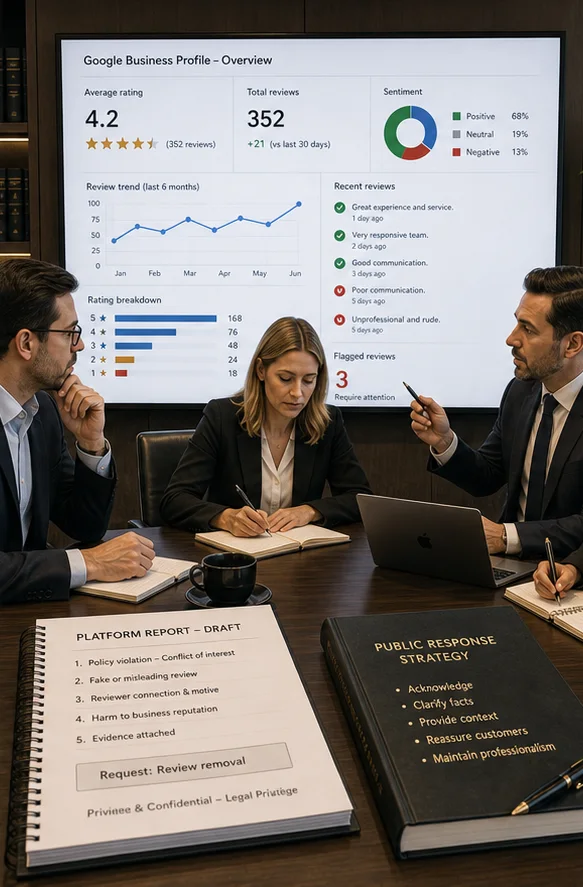
A public reply should be short, factual and restrained. In many files the safest wording is that the business takes privacy seriously, is reviewing the matter through the appropriate channel, and invites the reviewer to contact an official private point of contact. What the reply should usually avoid is confirming whether the reviewer is a customer, patient, employee or parent if that confirmation would itself disclose protected information. It should also avoid copying the private data back into the thread in order to deny it.
This is especially important for regulated or sensitive sectors: healthcare, education, legal services, hospitality, financial services, real estate, childcare, wellness, HR-heavy businesses and any company handling minors' data. A reply written in anger can become a second publication, a confidentiality breach or a contradiction of the Google report. The public audience needs reassurance, not a line-by-line debate using private records.
When Escalation Becomes More Serious
Escalation deserves closer review when the review doxxes a private address, identifies a child, exposes medical or financial data, names staff together with accusations of criminal or unethical conduct, republishes a confidential complaint, or is part of a repeated campaign. Those facts may justify a stronger Google appeal, a privacy-focused legal notice, a broader online-reputation strategy or local counsel review on urgent relief. The correct route depends on proportionality, evidence quality and the business objective.
The key caution is not to overpromise results. Removal is never guaranteed, police or regulator action is never automatic, and a privacy law does not erase the need for a careful factual file. But businesses usually improve their position when they preserve the review early, classify the personal-data issue precisely, redact internal material carefully and keep public messaging aligned with the platform submission.
Related PimLegal Reading
For related reading, see our local article on responding to harmful Google reviews and the United Kingdom Google review removal page. These two internal resources help connect the privacy issue with the wider removal, response and escalation framework for United Kingdom.
Selected Official References
- Data Protection Act 2018
- Google prohibited and restricted content policy
- Google Business Profile review reporting guidance
Practical Conclusion
A review that exposes personal data should be treated as a privacy-sensitive evidence file from the first hour. Preserve it, classify it, report it through the best Google category, and avoid turning the owner's reply into another disclosure event.
This article is general information only and not legal advice for a specific dispute in United Kingdom. Businesses should seek local advice before sending formal notices, disclosing records, or assuming that any review will be removed.