
A lawyer-style Thailand guide to defamatory YouTube videos, Thai criminal and civil defamation law, lawful strike routes, evidence preservation, case studies and how PimLegal can help.

A defamatory YouTube video can damage a person or business faster than a written review. The video may appear in Google Search, be embedded on other websites, be clipped into Shorts, be translated by captions, and be repeated in comments. In Thailand, that kind of publication is not only a reputation problem. It can become a criminal defamation issue, a civil damages claim, a platform-policy complaint, a privacy complaint, a copyright complaint, or a request for legal removal. The right response is not to click every report button and hope the channel disappears. The right response is to build a precise legal and evidentiary file.
This article explains how a lawyer would analyse YouTube defamation in Thailand: what Thai law looks for, when YouTube may remove or restrict a video, what people mean by "striking" a video, which evidence matters, and how PimLegal can help a company, founder, hotel, clinic, influencer, professional or foreign resident respond to harmful video content.
1. Why YouTube defamation is different from an ordinary bad review
A Google review is usually short. A YouTube video can be long, emotional, edited, subtitled, monetized and amplified. A creator can combine voiceover, screenshots, dramatic thumbnails, pinned comments and community posts. A single allegation can therefore appear in several legally relevant forms: the spoken words, the title, the thumbnail, on-screen captions, the description, the hashtags, the comments and later reposts.
For Thai defamation analysis, the important question is not whether the video is negative. The question is whether it imputes a fact to an identifiable person or business before third parties in a way likely to harm reputation, expose the target to hatred or contempt, or injure commercial standing. A video saying "I had a bad experience and would not return" is different from a video saying "this clinic injects illegal substances", "this hotel steals from guests", "this restaurant is a fraud", or "this lawyer bribed officials". The first may be opinion or consumer criticism. The second group contains factual accusations that may need proof.
YouTube also creates a practical urgency. By the time a client calls a lawyer, the video may already have hundreds of comments, reposts and screenshots. Removal may help, but the record must be preserved before content changes, disappears or is edited. This is why PimLegal treats YouTube defamation as an evidence-first matter.
2. Thai law: criminal defamation, civil damage and online publication
Thai defamation law is serious because it can involve both criminal and civil consequences. In broad terms, Thai Criminal Code section 326 concerns imputing something to another person before a third person in a way likely to impair reputation or expose that person to hatred or scorn. Section 328 increases exposure where defamation is committed by publication or similar dissemination. A public YouTube video, livestream, Short or community post can therefore create higher risk than a private complaint email because it is distributed to viewers.
Civil liability is separate. Thai Civil and Commercial Code section 423 is commonly discussed in online reputation disputes because it concerns false statements circulated as fact that injure another person's reputation, credit, earnings or prosperity. For a business, this can matter where the video affects bookings, investor confidence, professional relationships, licensing, advertising accounts or sales. For a more detailed discussion of Thai criminal defamation elements, see PimLegal's guide to Thailand Criminal Code sections 326-333 and online reputation.
The Computer Crime Act may also be mentioned in online disputes, but it should not be used loosely. Not every defamatory video is automatically a computer crime. The analysis depends on the exact content, the alleged falsity, the nature of the computer data, public-damage elements, and current Thai interpretation. A careful strategy separates ordinary defamation, civil reputation damage, privacy, copyright, harassment and any cyber-law issue instead of mixing them into one vague threat.
3. What does it mean to "strike" a YouTube video?
Clients often ask whether PimLegal can "strike" a defamatory video. The word "strike" needs care. On YouTube, a strike is a platform enforcement consequence. It may arise from Community Guidelines violations or from copyright removal requests. Defamation is usually handled through legal-removal channels, local-law analysis or policy categories such as harassment, privacy, impersonation, threats or illegal content. A legal complaint may lead to removal, restriction or other action, but it does not mean the creator automatically receives a strike.
A copyright strike is narrower. It is appropriate only when the video uses copyrighted material owned or controlled by the complainant without authorization and no exception applies. A business cannot use copyright merely because the video is defamatory. Filing a false copyright claim can create platform, legal and credibility problems. If the video copies your marketing footage, confidential training video, website images, product photos, seminar recording or other protected material, a copyright removal request may be part of the strategy. If the video simply talks about you, the better route is usually defamation, harassment, privacy, impersonation or legal removal.
A lawful YouTube strategy therefore begins with classification. Is the problem false factual accusation? Threatening harassment? Disclosure of private data? Impersonation? Copyrighted footage? Hate or abuse? Fraudulent use of a name or logo? Each category has a different proof standard and reporting channel.
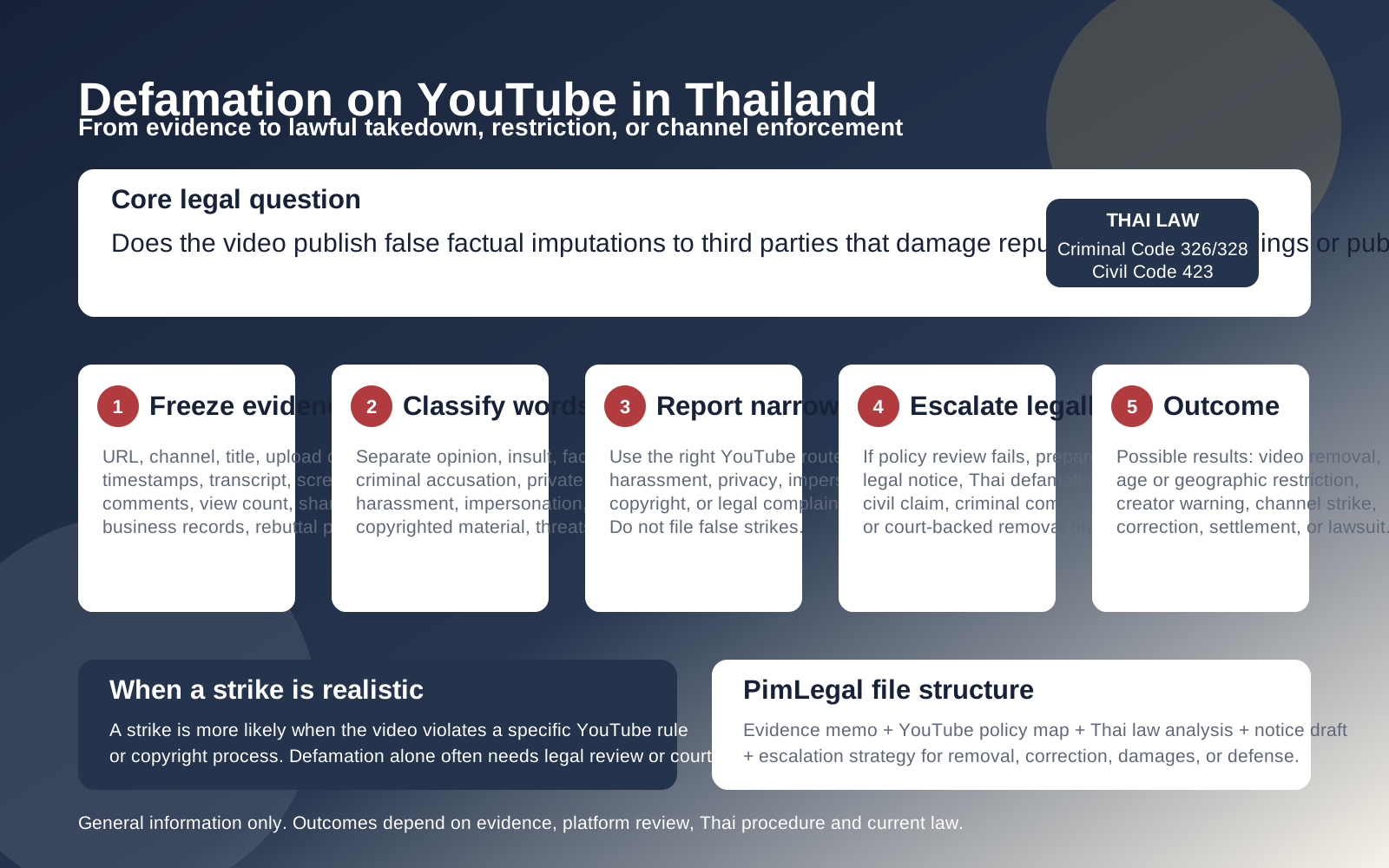
4. YouTube routes: policy report, privacy complaint, copyright, legal request
There are four common YouTube routes. First, a platform-policy report can be used when the video violates YouTube rules, for example harassment, cyberbullying, threats, impersonation or other prohibited conduct. This route is strongest when the video attacks a person directly, encourages followers to harass the target, discloses sensitive details, uses abusive targeting, or repeats insults as a campaign.
Second, a privacy complaint may be appropriate where the video shows someone's face, home, address, phone number, medical information, family members, private messages, identity documents or other personal details in a way that creates privacy risk. For Thai businesses, this can include staff images, customer images, CCTV, delivery records, booking data or private correspondence. Privacy is not the same as defamation, but the two often overlap in video disputes.
Third, a copyright removal request may apply if the creator used your protected footage, photographs, webinar, training material, music, advertisement, slides or creative work. This is the route that can create a copyright strike, but only when copyright is genuinely engaged. It should not be used as a shortcut for reputation management.
Fourth, a legal-removal request may be used where the video is unlawful under local law, including defamation law. YouTube has a country-specific defamation help page for Thailand and a Google legal-removal pathway. A legal request should identify the exact URLs, the exact statements, the country law relied on, the affected person or business, the evidence of falsity or harm, and the remedy requested. A general complaint saying "this video is fake and defamatory" is usually too weak.
5. Evidence checklist before sending any report
Before submitting a platform report or legal complaint, preserve the record. Capture the full URL, channel URL, video title, upload date, view count, like count, pinned comments, description, hashtags, thumbnail, transcript, auto-captions, relevant timestamps, comments, replies and any related Shorts or community posts. Use full-page screenshots and screen recordings. Save the original files with date and time. If the video is in Thai, English or another language, prepare a reliable translation of the key statements.
Next, prepare rebuttal evidence. For a hotel, this may include booking records, CCTV retention logs, guest messages, payment records, housekeeping reports and prior correspondence. For a clinic, it may include consent forms, licensing documents, treatment records, product invoices and medical-supervision evidence. For a company, it may include contracts, delivery records, tax invoices, chat logs and internal investigation notes. For a professional, it may include certificates, court records, regulator correspondence or client communications. PimLegal's evidence checklist for online review disputes in Thailand can be adapted to YouTube videos because the same principle applies: the claim must be broken down sentence by sentence.
6. Case study: Bangkok clinic accused in a YouTube video
Imagine a Bangkok aesthetic clinic discovers a YouTube video titled "Do not go to this clinic". The creator says the clinic uses illegal imported substances, shows blurred treatment-room clips, and tells viewers to report the doctors. The video includes emotional commentary, screenshots of private chat messages and a thumbnail showing the clinic logo beside the word "illegal".
A lawyer would not simply demand deletion. The file would be divided into categories. The illegal-substance claim is a factual accusation that may be defamatory if false. The logo and thumbnail may create brand and impersonation issues. The private chats may create privacy or confidentiality issues. The blurred treatment-room video may create patient-data concerns. If the creator used the clinic's official website photos or promotional videos, copyright may also be relevant. The YouTube report should then match each category to the correct route. The Thai legal notice should focus on the statements that are false, damaging and provable.
7. Case study: Phuket hotel and travel creator
In another scenario, a travel creator posts a long video about a Phuket hotel. Some statements are personal opinion: "the room felt overpriced" or "I would not stay again". Other statements are more dangerous: "the hotel steals deposits", "management lies to tourists", or "the property is a scam". The creator encourages followers to leave one-star reviews even if they never stayed there.
This fact pattern sits close to several public Thailand review disputes. International reporting on the Koh Chang resort dispute involving Wesley Barnes showed how negative online reviews in Thailand can escalate into criminal defamation exposure. Vice and Coconuts Bangkok also reported on a hotel-review dispute involving a 6/10 Agoda review and legal threats. Those matters were not YouTube judgments, but they illustrate the same legal point: Thailand treats public accusations against identifiable businesses seriously, especially where the wording moves from experience to alleged misconduct. For a YouTube video, the amplification may make alleged damage easier to argue.
8. Case study: former employee livestream
A former employee livestreams for forty minutes and alleges that a Bangkok company cheats customers, hides tax, mistreats staff and pays officials. The livestream includes screenshots of internal documents and names managers personally. Viewers clip the strongest allegations into Shorts and repost them on Facebook and TikTok.
This is no longer a simple moderation request. The company may need emergency evidence capture, HR-document review, employment-law advice, confidential-information analysis, defamation analysis, and a communications plan. Some statements may be protected if true and made in good faith. Some may be unsupported accusations. Some may expose private data. Some may require a police complaint, civil action, injunction strategy, platform reports or negotiation. A rushed public response can make the dispute worse, especially if the company reveals employee or customer data while defending itself.
9. The role of truth, public interest and good faith
Not every negative YouTube video is unlawful. Thai law includes concepts that can matter, including truth, public interest and good-faith comment in appropriate circumstances. A creator who documents a genuine consumer experience, avoids exaggeration, keeps evidence, and separates opinion from fact may have a stronger position than a creator who uses criminal language without proof. A business that tries to silence every criticism may face reputational blowback and anti-SLAPP arguments.
That is why PimLegal does not advise automatic litigation for every negative video. We examine whether the statements are factual, false, damaging, published to third parties, identifiable, provable, and proportionate to escalate. Sometimes the best answer is a YouTube policy report. Sometimes it is a private correction request. Sometimes it is a legal notice. Sometimes it is a civil or criminal file. Sometimes the safest advice is to respond publicly with evidence and avoid overclaiming.
10. How PimLegal can help with defamatory YouTube videos
PimLegal can assist at each stage of a YouTube defamation matter in Thailand. First, we preserve and organize the evidence: video URLs, timestamps, transcript, captions, screenshots, comments, channel information, reposts and business records. Second, we classify the video under YouTube policy, privacy, copyright and Thai law. Third, we prepare targeted platform reports rather than generic complaints. Fourth, we draft legal notices and correction requests where the creator is identifiable. Fifth, we advise on Thai criminal defamation, civil damages, Computer Crime Act issues, privacy and confidential-information exposure. Sixth, when needed, we coordinate litigation strategy, court-backed remedies and settlement discussions.
For businesses, the goal is not only removal. The goal is to stop ongoing harm, preserve the legal record, avoid public overreaction, protect customers and staff, and choose the narrowest remedy that can work. For creators or reviewers accused of defamation, PimLegal can also review the content, identify defensible opinion, correct risky wording, preserve evidence and respond to legal notices. In both directions, the method is the same: facts first, law second, platform route third, escalation only when justified.

11. Practical 48-hour action plan
Within the first 48 hours, do not argue in the comments and do not send an angry public threat. Preserve the full video evidence. Identify every related URL. Write a one-page chronology. Collect rebuttal documents. Decide whether the most urgent route is privacy, harassment, copyright, impersonation or defamation. Prepare a clean timestamp table with three columns: exact words, why they are false or unlawful, and supporting evidence. If the matter involves staff, customers, medical treatment, minors, private addresses, financial accusations or criminal allegations, seek Thai legal advice before contacting the creator publicly.
If a platform report fails, do not assume the matter is over. YouTube policy review and Thai legal analysis are different. A video may remain online after a policy report but still support a legal notice or claim. Conversely, a video may be removed under policy without proving defamation in court. The best file keeps those layers separate.
Sources and further reading
- YouTube Help: Defamation - Thailand
- Google Legal Help: Report Content On Google
- YouTube Help: Harassment and cyberbullying policies
- YouTube Help: Privacy Complaint Process
- YouTube Help: Understand copyright strikes
- YouTube Help: Submit a copyright removal request
- UNODC legal database: Thailand Computer Crime Act sections 14-15
- Bangkok Post / AFP: Koh Chang resort defamation complaint over online review
- The Guardian: TripAdvisor warning after Thai hotel review lawsuit
- Vice: Thailand hotel review legal-threat case study
- The Nation: Supreme Court president recommendations on SLAPP-style criminal cases
This article is general legal information for online reputation, platform-policy and Thai defamation education. It is not legal advice for any specific video, channel, creator, business or pending dispute. YouTube enforcement, Thai civil liability, criminal procedure, privacy issues and any possible strike depend on the exact content, evidence, jurisdiction and current law.